My Ultralight Backpacking Gear List: 10 lb Base Weight, 3-Season, 2–4 Nights
My backpacking gear list ultralight setup comes in under 10 lb base weight. It works for 3-season trips of 2–4 nights. The main rule is simple. Cut weight on the big three first: pack, shelter, and sleep system. Then refine the small stuff. Base weight means everything in your pack except food, water, and the clothes you wear.
Here is the full list to scan before the detail:
| Category | Item | Weight |
|---|---|---|
| Pack | Frameless 40L (Ultra fabric) | 1 lb 4 oz |
| Shelter | Trekking-pole tent | 1 lb 8 oz |
| Sleep | 20°F quilt + pad | 2 lb 6 oz |
| Water | Sawyer Squeeze + bottles | 6 oz |
| Cook | Titanium pot + stove | 8 oz |
| Small stuff | Filter, layers, ditty bag | ~3 lb |
Shelter: 1–2 lbs. A trekking-pole tent or tarp weighs less than a freestanding tent. Sleep systems: 2–2.5 lbs. A quilt with a pad attachment system saves ounces over a bag. Pack: 1.5–2 lbs.
The free printable backpacking checklist and the full weight breakdown by category are what set this list apart. Print it. Weigh your own gear. Then adapt it to your conditions.
What Is the 20% Rule for Backpacking?
The 20% rule says your total pack weight should not exceed 20% of your body weight. A 150 lb hiker tops out around 30 lbs. This is the simple test that keeps a backpacking trip comfortable.
Total pack weight means everything: base weight (gear without food and water) plus food and water. A 10 lb base weight leaves plenty of room. Add 5 lbs of food and 2 lbs of water and you’re at 17 lbs. That’s well under the limit for most adults.
This is where ultralight backpacking earns its keep. Lighter gear lowers your base weight, so you stay under 20% even on multi-day trips with a full food bag.
Shelter System: 1–2 lbs
Your shelter should land between 1 and 2 lbs, and the fastest way to get there is a trekking-pole tent or an ultralight tarp shelter instead of a freestanding tent. Poles and stakes you already carry replace the tent’s own frame, so you drop weight without losing coverage.
Tarptent ProTrek (under 20 oz)
The Tarptent ProTrek is a trekking-pole tent that comes in under 20 oz. It uses your hiking poles as its frame, so there are no tent poles to carry. For a 3-season shelter on multi-day trips, that’s a big weight cut. It still gives you full bug protection and a floor, which a plain tarp does not.
Vargo Titanium Shepherds Hook Stakes (0.3 oz each)
Stakes add up fast, so the Vargo Titanium Shepherds Hook stakes earn their place at 0.3 oz each. Carry six and that’s under 2 oz total for holding down your shelter. Titanium keeps them light but strong enough to drive into hard ground.
Pair the ProTrek with these stakes and your whole shelter sits near 1.3 lbs. That leaves room in your base weight for sleep systems and the rest of your backpacking gear.
Sleep System: 1.5–2.5 lbs
A sleep system in the 1.5–2.5 lb range means a quilt and an inflatable pad — that combo is the ultralight standard, and it’s where most people save their second-biggest chunk of weight after the shelter.
Enlightened Equipment Revelation Quilt (20°F)
The Revelation 20°F quilt weighs about 19 oz and is the pick I keep coming back to. The quilt vs sleeping bag question comes down to this: a bag has insulation under you that gets crushed flat, so it adds weight without adding warmth. A quilt skips that dead weight. The Revelation’s pad attachment system straps it to your pad so it doesn’t slide off at night. For most 3-season backpacking trips, an ultralight backpacking quilt like this one is the smarter call.
Therm-a-Rest NeoAir XLite NXT
The NeoAir XLite NXT comes in around 13 oz in a regular size and packs down to about the size of a water bottle. It’s warm enough for cold nights and the baffles keep you from rolling off. The pad attachment straps on the Revelation clip right onto it, so the two work as one unit. Together they land near 2 lbs — right in the target range.
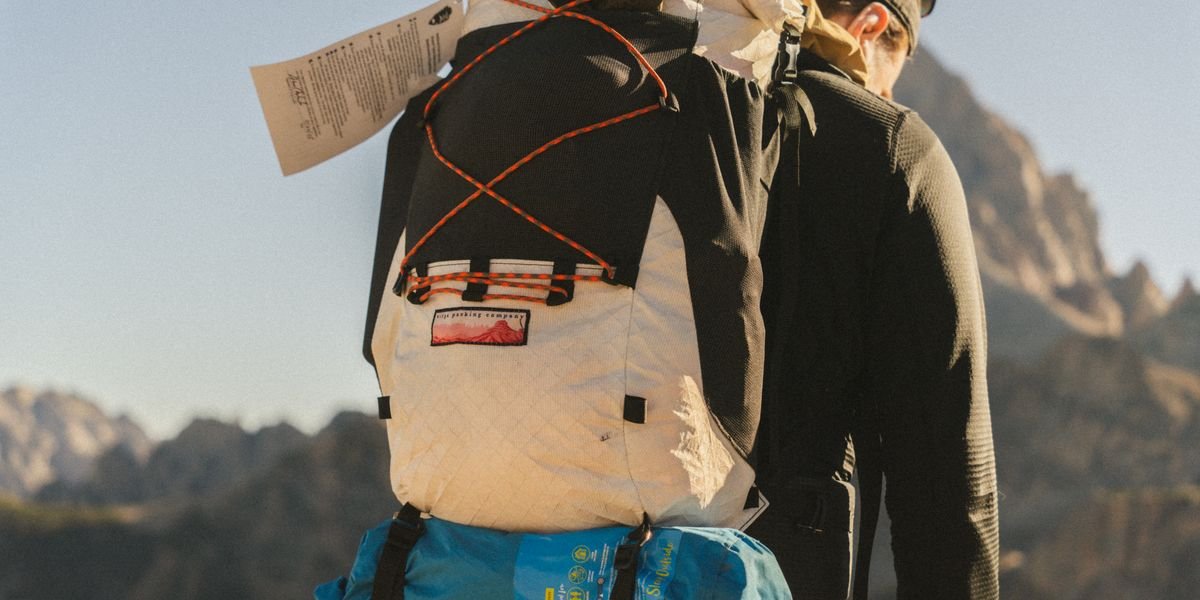
Backpack: 1.5–3 lbs
A backpack in the 1.5–3 lb range is the sweet spot for a sub-10 lb base weight: light enough to save your shoulders, sturdy enough to haul food and water on multi-day trips. Below are the picks that earn their place.
Gregory Focal 48 (2.9 lbs)
The Gregory Focal 48 is a framed lightweight backpacking pack that carries 30 lbs comfortably, so it handles a full resupply without sagging. The frame and hipbelt add a few ounces over frameless options, but they save your body on long days.
A frameless ultralight backpack cuts weight further, but it only works when your total load stays near 20 lbs. For trips with heavy food carries, the Focal’s support wins.
Capacity should match trip length: 40–50L covers 2–4 nights, while longer trips need more room for food.
ZPacks Shoulder Pouch (0.63 oz)
The ZPacks Shoulder Pouch (0.63 oz) keeps your Sawyer Squeeze, snacks, and phone within reach so you stop dropping your pack all day. It’s a tiny add-on that makes a big difference.
Cook + Water System: 0.5–1 lb
Cook and water gear should weigh 0.5–1 lb total. An alcohol stove, a scoop of fuel, a Sawyer Squeeze (3 oz), and two 1L bottles get you there.
“Fancy Feast” Alcohol Stove
The Fancy Feast stove weighs about 0.3 oz and costs almost nothing. You make it from a cat food can: punch holes around the rim, add alcohol, light it. It boils two cups in roughly 6–8 minutes. A canister stove is faster and easier to control, but the stove, fuel can, and pot add up to over a pound. Cold-soaking skips the stove entirely—soak dry food in water for a few hours—but hot coffee on a cold morning is worth 0.3 oz to me. The ultralight water filter and bottles stay the same whichever cooking method you pick, so this choice is mostly about morning morale.
HEET Antifreeze (Alcohol Fuel)
HEET in the yellow bottle is the cheap fuel for this stove—about 0.5 oz boils two cups. Carry 4–6 oz in a small bottle for a 3-day trip. One warning: buy the yellow bottle only. The red one has additives that clog the stove.
Electronics: 0.5–1 lb
Electronics: 0.5–1 lb — a headlamp, a satellite communicator, and a power bank cover light, safety, and charging for a 2–4 night trip. Keep the whole kit near a pound and you won’t undo your big-three savings.
Garmin InReach Mini 3
The InReach Mini 3 weighs 3.5 oz and gives you two-way texting and an SOS button anywhere, with no cell signal needed. On a solo backpacking trip it’s the one item I never leave behind. Pair it with your phone over Bluetooth so you type on a bigger screen.
Anker Nano 5000
The Anker Nano 5000 weighs 3.5 oz and recharges a phone about one full time. That’s enough for a 3-day trip if you keep the phone in airplane mode. For longer multi-day trips, step up to a 10,000 mAh bank at roughly 7 oz.
For light, a rechargeable ultralight headlamp like the Nitecore NU25 (1.9 oz) runs off the same power bank, so you skip spare batteries. Total for all three: about 9 oz.
Hiking Gear: Worn Weight
Worn weight doesn’t count toward your base weight, but it still affects how you hike. Trail runners, trekking poles, and gaiters are the three worn items worth dialing in. Here’s what I use.
Salomon Sense Ride 5 Trailrunners
Trail runners vs hiking boots is the biggest worn-gear question, and I pick trail runners. The Sense Ride 5 weighs about 10.5 oz per shoe and dries fast after a stream crossing. Boots add ankle support but also ounces and slow drying time.
Black Diamond Cork Trekking Poles
Cork grips stay dry when your hands sweat. The poles save your knees on steep descents and help you balance on rocky ground. They also double as tent supports for a trekking-pole shelter, so they earn their place twice.
Add a pair of 2 oz gaiters to keep grit out of your shoes. Together these three items add up to about 1.5 lbs of worn weight.
Clothing: Layering System for 3-Season Conditions
Clothing: 1.5–2.5 lbs — the goal is one system that handles cold mornings, hot climbs, and rain, not a pile of spare outfits. The trick is separating active insulation (worn while moving) from static insulation (worn in camp), and adding one reliable ultralight rain shell on top.
Mountain Hardwear Ghost Whisperer Hoody
This is my static layer at about 8 oz. It goes on the moment I stop moving, because a sweaty hiker chills fast once the pack comes off. The hood seals in heat without a hat.
Patagonia Capilene Thermal Hoody
My active insulation, around 7 oz. Grid fleece breathes on climbs, so I don’t soak the down jacket underneath. A thin synthetic base layer plus one spare pair of socks covers the rest — roughly 4 oz combined.
Rain management is simple: the shell lives in an outside pocket, ready before the storm hits.
Essential Items: Safety, Hygiene, and Repair
Safety, hygiene, and repair items add about 6–8 oz total, and they’re non-negotiable: a blister or a torn shelter can end a backpacking trip early. These are the small things that keep a multi-day trip on track.
Suunto Clipper Compass
At 0.2 oz, this tiny compass clips to your watch strap, so it’s always on you. It’s a backup for when your phone dies or fog kills visibility. Cheap insurance for any backpacking gear list.
DutchWare Deuce Scoop
The best ultralight trowel I’ve found weighs 0.6 oz and digs a proper cathole. Pair it with a small bottle of hand sanitizer and a few sheets of toilet paper in a zip bag.
For the rest of the kit: a backpacking first aid kit (about 2 oz, built around blister care and a few meds), sunscreen in a tiny repackaged tube, and a mini Bic lighter. My backpacking repair kit is just 1 oz — a few feet of Tenacious Tape, a needle, and some cord. That’s the whole safety and hygiene load.
Weight Breakdown: Where Your Base Weight Comes From
| Category | Weight | Share of Base Weight |
|---|---|---|
| Shelter | ~1.5 lbs | 15% |
| Sleep system | ~2 lbs | 20% |
| Backpack | ~2.9 lbs | 29% |
| Cook + water | ~0.8 lbs | 8% |
| Electronics | ~0.7 lbs | 7% |
| Essentials + repair | ~0.6 lbs | 6% |
| Clothing + misc | ~1.5 lbs | 15% |
The pack is the heaviest single item, but the big three together are about 64% of the total.
Which Big Three Item Should You Cut First to Lower Base Weight?
Start with your sleep system. A quilt and inflatable pad save more weight per dollar than swapping packs, and a proper pad attachment system keeps drafts out without adding grams. Then trim the pack. Shelter comes last — it’s already light.
How to Adapt This List for Different Environments
This 10 lb list is built for 3-season trips, and you adjust it by swapping a few items, not rebuilding it. Desert and alpine trips pull the list in opposite directions.
How Do You Adjust Sleep Systems and Water Capacity for Desert vs. Alpine Trips?
In the desert, carry more water: two 1L Smartwater bottles plus a 2L bladder, and a Sawyer Squeeze to refill from springs. A tarp or bivy with a bug net beats a full tent when nights are warm and dry.
In the alpine, a 20°F quilt may not be enough. Size up to a 10°F quilt, add a closed-cell pad under the NeoAir XLite NXT for cold ground, and carry a warmer insulation layer.
For bug pressure, add a head net (0.6 oz) and treat your shelter. For heavy rain, swap the polycro sheet for a Tyvek ground sheet and bring a larger tarp.
Frequently Asked Questions
What are the must-have items for ultralight backpacking?
The must-haves are shelter, a sleep system, a pack, water treatment, food, and a way to stay warm and dry. Everything else is a choice. A Sawyer Squeeze, a quilt, and a trekking-pole tent cover the core needs.
Is there a PDF checklist for ultralight backpacking?
Yes. The printable checklist at the top of this article lists every item with its weight, so you can print it and check off gear as you pack. Weigh each item on a kitchen scale and write in your real numbers.
What are 10 essential items you need to take with you when backpacking?
Ten essentials: shelter, sleep system, pack, water filter, food, stove or cold-soak setup, headlamp, first aid kit, rain layer, and navigation. On multi-day trips, add a repair kit with Tenacious Tape and a spare pad attachment.
What is the 20% rule for backpacking?
The 20% rule says your total pack weight should stay at or under 20% of your body weight. A 150 lb hiker caps out around 30 lbs. Base weight counts toward that number, and so do food and water.