The workplace is undergoing its biggest transformation since the rise of cloud computing.
For years, productivity improvements focused on faster software, better collaboration tools, and remote work solutions. In 2026, the focus has shifted toward something far more powerful: AI-powered workspaces.
Instead of employees adapting to software, modern workspaces are beginning to adapt to employees.
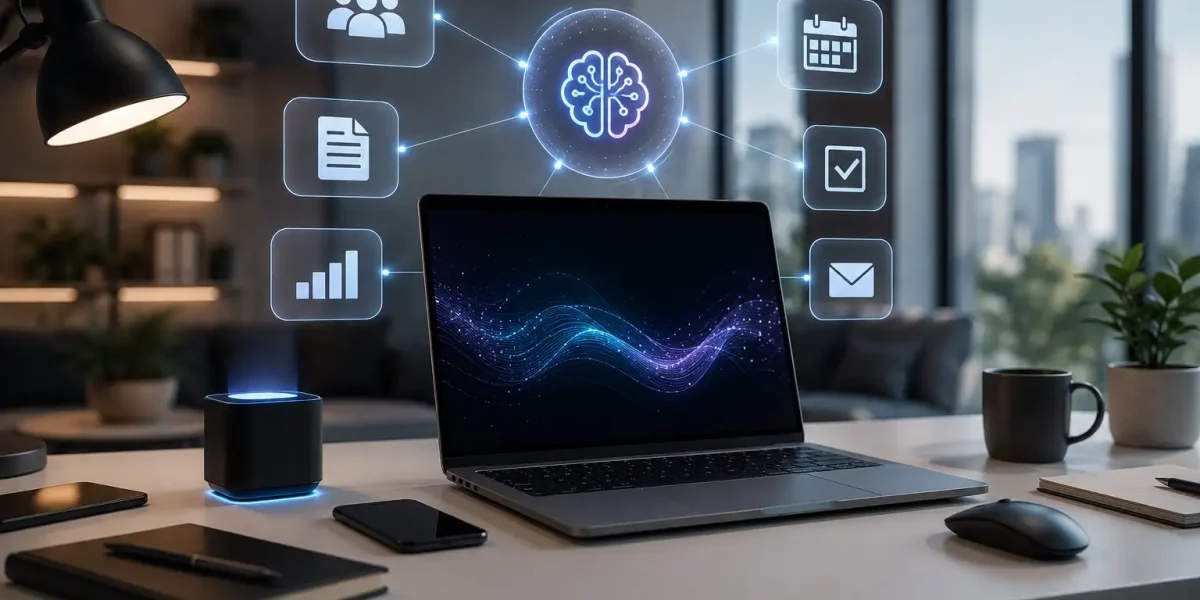
Artificial intelligence is now capable of organizing schedules, summarizing meetings, managing tasks, generating reports, analyzing data, and even predicting workflow bottlenecks before they occur. As organizations continue to embrace AI-driven systems, the traditional concept of a digital workplace is rapidly evolving into an intelligent productivity ecosystem.
The result is a new era where efficiency is no longer driven solely by human effort but by seamless collaboration between people and AI.
What Is an AI-Powered Workspace?
An AI-powered workspace is a digital work environment where artificial intelligence assists employees in completing everyday tasks more efficiently.
Unlike traditional productivity tools that require manual input and management, AI-enhanced platforms actively support users by automating repetitive processes, organizing information, and delivering actionable insights.
These workspaces often combine:
- AI assistants
- Smart calendars
- Automated task management
- Intelligent document generation
- Meeting summaries
- Workflow automation
- Real-time collaboration tools
- Data-driven decision support
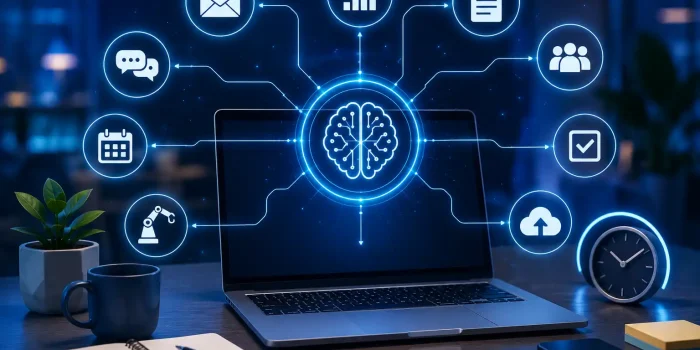
Rather than functioning as individual tools, these systems work together to create a unified and intelligent workplace experience.
Why Businesses Are Embracing AI Workspaces
The modern workforce faces an increasingly complex set of challenges.
Employees spend significant portions of their day switching between applications, responding to messages, attending meetings, and managing administrative tasks.
Research consistently shows that knowledge workers often lose valuable time due to interruptions and context switching.
AI-powered workspaces address these challenges by reducing manual effort and streamlining workflows.
Organizations adopting these technologies are reporting:
- Faster project completion
- Improved collaboration
- Better time management
- Reduced administrative workload
- Enhanced employee productivity
In a competitive business environment, even small efficiency gains can produce substantial results.
Trend #1: AI Assistants Becoming Digital Colleagues
One of the most noticeable workplace trends in 2026 is the rise of AI assistants that function almost like team members.
Modern AI assistants can:
- Draft emails
- Summarize conversations
- Create presentations
- Generate reports
- Schedule meetings
- Organize project information
Instead of simply responding to commands, these systems are becoming proactive participants in daily workflows.
Employees increasingly rely on AI assistants to handle routine tasks, allowing them to focus on strategic and creative work.
Trend #2: Smart Meeting Management
Meetings remain essential for collaboration, but they are often time-consuming.
AI-powered workspaces are changing how organizations approach meetings by automatically:
- Recording discussions
- Generating summaries
- Identifying action items
- Assigning tasks
- Tracking deadlines
Rather than manually taking notes, employees can focus entirely on the conversation while AI handles documentation.
This trend is significantly improving both productivity and meeting effectiveness.
Trend #3: Predictive Task Management
Traditional task management systems require users to manually organize priorities.
AI-powered platforms are introducing predictive task management capabilities.
These systems analyze:
- Deadlines
- Workload distribution
- Team availability
- Project dependencies
Based on this information, AI can recommend priorities and identify potential delays before they become serious issues.
This shift is helping teams stay ahead of problems instead of reacting to them.
Trend #4: Intelligent Knowledge Management
Modern organizations generate enormous amounts of information every day.
Documents, messages, reports, and meeting notes often become scattered across multiple platforms.
AI-powered workspaces solve this problem by creating centralized knowledge systems that can:
- Organize information automatically
- Search documents intelligently
- Provide contextual answers
- Surface relevant content instantly
Employees no longer need to spend valuable time searching for information that already exists within their organization.
Trend #5: Personalized Productivity Experiences
No two employees work exactly the same way.
One of the most exciting developments in AI workspaces is personalization.
AI systems can learn:
- Preferred working hours
- Communication habits
- Task completion patterns
- Productivity peaks
Using these insights, workspaces can deliver customized recommendations that help individuals work more effectively.
The future workplace is becoming increasingly adaptive rather than standardized.
How AI Workspaces Are Changing Remote Work
Remote and hybrid work models continue to dominate many industries in 2026.
AI-powered workspaces are helping distributed teams remain productive by improving:
Communication
AI-generated summaries ensure team members stay aligned even when working across different time zones.
Collaboration
Smart systems can identify project updates and share relevant information automatically.
Project Tracking
Managers gain real-time visibility into progress without requiring constant status meetings.
Employee Support
AI assistants provide immediate access to resources and information regardless of location.
These capabilities are helping organizations maintain efficiency while supporting flexible work environments.
Challenges Organizations Must Consider
Despite the benefits, AI-powered workspaces also present challenges.
Privacy Concerns
Organizations must ensure employee data is handled securely and transparently.
Over-Reliance on Automation
AI can improve efficiency, but human oversight remains essential for critical decisions.
Training Requirements
Employees need time and guidance to fully leverage AI-powered systems.
Ethical Considerations
Businesses must establish clear policies regarding AI-generated content and decision-making processes.
Successful implementation requires balancing automation with responsible governance.
The Future of AI-Powered Workspaces
The next generation of workspaces is expected to become even more intelligent.
Future developments may include:
- Autonomous project coordination
- Real-time business intelligence
- Advanced predictive analytics
- AI-generated strategic recommendations
- Personalized digital work environments
As AI capabilities continue to improve, workspaces will evolve from productivity platforms into intelligent operating systems for modern organizations.
Final Thoughts
The rise of AI-powered workspaces represents a fundamental shift in how work gets done.
By automating routine tasks, improving collaboration, reducing information overload, and delivering intelligent insights, these systems are helping organizations unlock new levels of productivity.
In 2026, the most successful businesses are not simply adopting AI tools. They are building entire work environments around AI-driven efficiency.
As this trend accelerates, AI-powered workspaces are likely to become the new standard for the modern digital workplace.