upGrad’s online data science courses promise a lot: flexible learning, collaboration with global institutions, and a direct path into high-demand roles. For mid-career professionals in the US, the appeal is obvious—you don’t have to quit your job to upskill. But is it the right choice for you? Let’s break down what the program actually offers, and what you should consider before spending thousands of dollars.
Who Is upGrad For?
upGrad targets working professionals who want to move into data science without pausing their careers. The blended learning format is designed to fit around your schedule—evenings, weekends, or lunch breaks. That’s a big plus if you’re juggling a full-time job and family commitments.
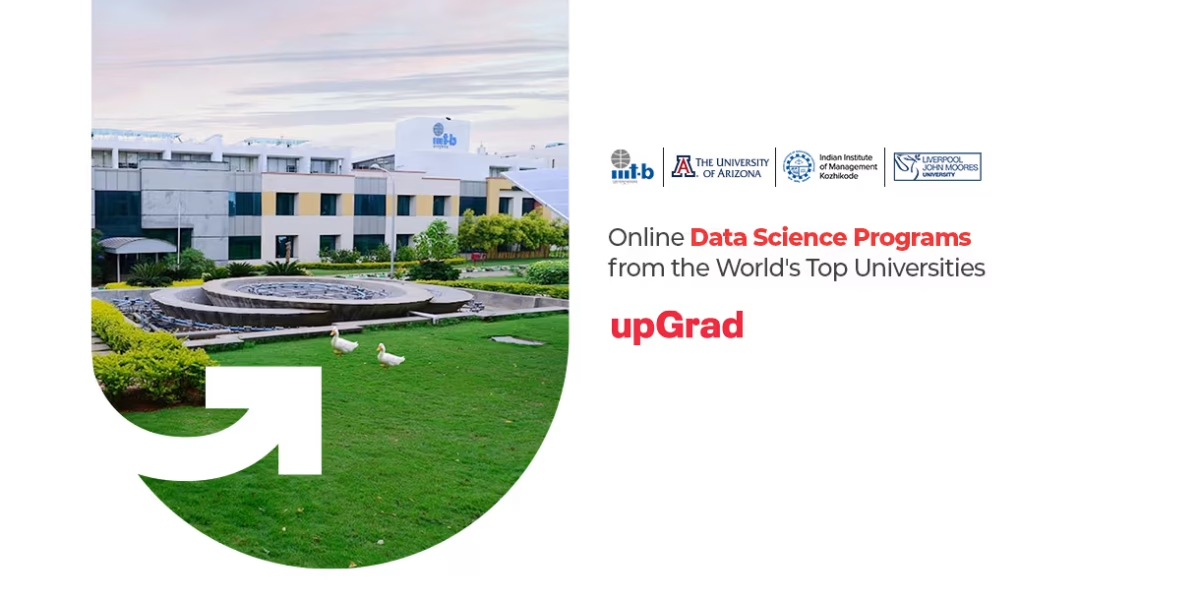
The courses are offered in collaboration with leading global institutions, though the page doesn’t specify which ones. That’s a notable omission. When you’re paying a premium, you want to know the exact university or institute backing your certificate. The page also notes that core topics and modules may vary across different programs, so you’ll need to check the specific program page for details.
Curriculum and Core Topics
The curriculum is structured to give a balanced mix of theory and practical application. You start with data analysis and exploration, using exploratory data analysis (EDA) and statistics to extract insights. Then you move into machine learning, where you build and deploy models with Python. Visualization is covered with Tableau and Matplotlib, and big data tools like Hadoop and Spark are introduced.
Database management is a key component—you’ll master SQL and data warehousing essentials. Business intelligence is also included, with a focus on analytics for decision-making and A/B testing. Cloud computing is covered, teaching you to process and manage data on platforms like AWS and Azure. Finally, ethics and data privacy are addressed, which is increasingly important in today’s data-driven world.
It’s a comprehensive list that mirrors what you’d find in many graduate-level data science programs. But remember, the actual modules may vary depending on which upGrad program you choose. The page is a general overview, not a detailed syllabus.
Hands-On Learning and Projects
One of the strongest selling points is the emphasis on hands-on projects. You’ll apply concepts to real-world datasets and case studies. This is crucial for building a portfolio that you can show to employers. The page also mentions regular quizzes, assignments, and mentor guidance to reinforce learning.
However, the quality of mentorship is a common concern in online courses. While upGrad claims to provide mentor guidance, the actual experience can vary—some learners report positive interactions, while others find support lacking. It’s worth researching the specific program’s mentorship structure before enrolling.
Tools and Technologies Taught
upGrad covers the tools that are actually used in the industry. Python and R for data analysis and machine learning, SQL and NoSQL for database querying, and Tableau and Power BI for visualization. For big data, you’ll get exposure to Hadoop and Spark. Machine learning frameworks like TensorFlow and Scikit-Learn are also included.
Cloud platforms like AWS and Azure are covered, which is a huge plus. Many data science roles require cloud skills, and having them on your resume can make you more competitive. The toolset is modern and relevant, which is a good sign.
Specializations and Electives
upGrad allows you to choose electives to align your learning with your career goals. Options include Artificial Intelligence, Machine Learning, Business Analytics, Cloud Computing, and Big Data Analytics. This flexibility is valuable—you can tailor the program to your interests or the demands of your target role.
For example, if you want to become a machine learning engineer, you’d choose the ML elective. If you’re more interested in managerial roles, Business Analytics might be a better fit. The choice is yours, but the page doesn’t specify how deep each elective goes or whether you can switch later.
Pricing and Value
Here’s where things get tricky. The scraped page doesn’t list any specific prices. But from general knowledge, upGrad’s data science courses can cost several thousand dollars. One Reddit user mentioned investing 3-4 lakhs (Indian rupees), which is around $4,000-$5,000. However, for US learners, pricing may be different.
It’s also important to note that the advertised price often includes taxes, and full payment is expected upfront. That’s a significant financial commitment. Some reviewers have compared the experience to a scam due to aggressive sales tactics and high upfront costs. That’s a red flag you should not ignore.
Before enrolling, ask for a detailed breakdown of costs, including any hidden fees. Also, check if there’s a payment plan or a money-back guarantee. The page doesn’t mention any, so you’ll need to contact sales for clarity.
Reputation and Reviews: The Mixed Reality
upGrad’s reputation is a mixed bag. On Trustpilot, reviewers mention positive experiences with well-structured courses, but a significant portion—78% of negative reviews—point to issues. Common complaints include difficulty getting refunds, poor customer support, and mismatched expectations.
On employee review sites, upGrad has a rating of 3.3 out of 5. While that’s about employee satisfaction, it also reflects internal culture, which can impact the quality of instruction and support you receive. Job security is rated lowest among factors, which may not directly affect you as a student, but it’s worth noting.
Some users have flat-out called it a scam, though that might be an overreaction. The reality is that upGrad is a legitimate company, but its aggressive marketing and high-pressure sales tactics have left a sour taste for some. Others have completed the program and found it valuable for their careers.
What You Should Consider Before Enrolling
Pros
- Flexible learning that fits around a full-time job
- Comprehensive curriculum covering core data science topics
- Hands-on projects to build a portfolio
- Relevant tools like Python, Tableau, and AWS
- Elective options to specialize
Cons
- High upfront cost with no clear pricing on the page
- Mixed reviews regarding support and refunds
- Lack of specific institutional partners mentioned
- Potential for aggressive sales tactics
The Bottom Line
upGrad’s data science course has a lot going for it: a solid curriculum, relevant tools, and flexibility for working professionals. If you’re self-motivated and can handle the financial risk, it might be a good stepping stone into a data science career.
But the downsides are real. The lack of transparent pricing on the page is frustrating. The mixed reputation—with a significant number of negative reviews—should give you pause. Before you commit, do your due diligence: read reviews for the specific program you’re considering, talk to alumni, and ask sales for a detailed cost breakdown.
Compare upGrad with other online data science bootcamps or university certificates. Some alternatives might offer more clarity in pricing and better support. At the end of the day, the best course is one that fits your learning style, budget, and career goals—and that’s a decision only you can make.
Related Posts:
 Foxit PDF Editor+ Review: A Faster, Lighter Adobe Alternative
 Hubstaff Review: Time Tracking and Productivity Insights for Modern Teams
 SHEIN Review: A Deep Dive into the Ultra-Fast Fashion Giant
 Modlily Review: What to Know Before You Buy
 Viator Review: Is It the Best Platform for Booking Tours and Activities?
 NordVPN Review 2026: Speed, Security, and Plans Explained