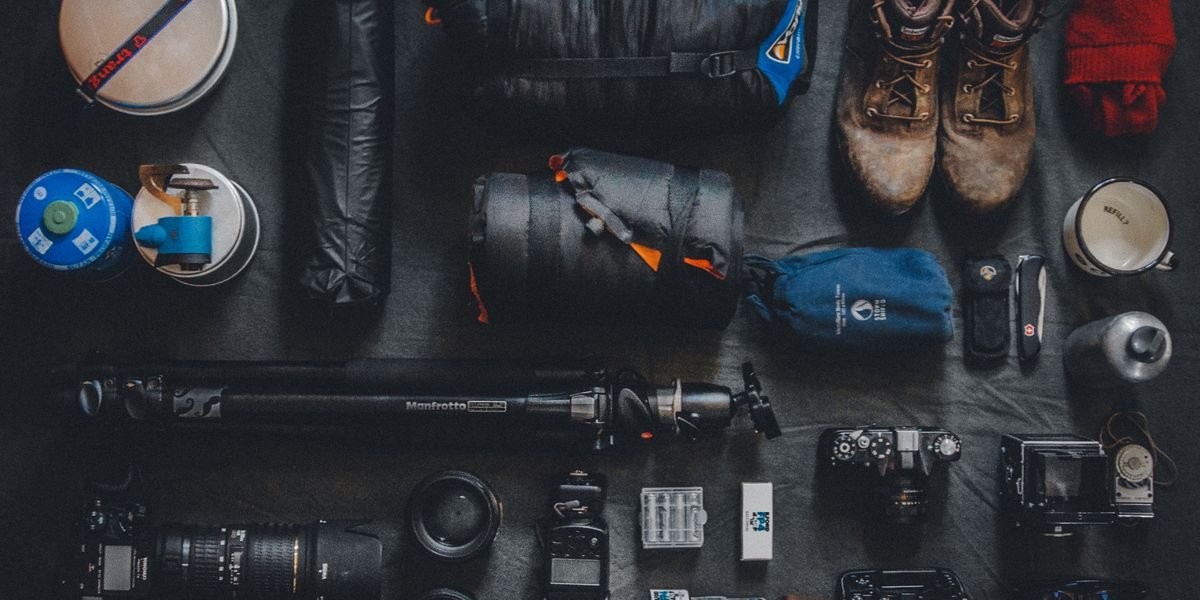
What Is a 10 lb Ultralight Backpacking Gear List?
A 10 lb ultralight backpacking gear list is a complete three-season kit that weighs about 10 pounds or less before you add food and water. That number covers your shelter, sleep system, pack, and everything else you carry.
The core idea is simple: every piece of gear earns its place by the ounce. You don’t cut weight by leaving essentials at home. You cut it by choosing lighter versions of the things you already need.
This guide gives you a weight budget, not just a list. You’ll learn how to split that 10 lb across categories, then hit your target with real gear picks at budget, mid-range, and premium prices.
What Is Base Weight vs. Worn Weight vs. Consumables?
Base weight is everything in your pack that isn’t food, water, or fuel. It’s the gear you carry no matter how long the trip is.
Worn weight is what’s on your body: clothes, shoes like the Altra Lone Peak, and your trekking poles. Consumables are food, water, and fuel, which change as you eat and drink.
Only base weight is a fair way to compare setups. Two hikers can carry the same pack and get very different numbers once food and water are counted.
Why Is 10 lb the Ultralight Benchmark?
Ten pounds is the line where a pack stops feeling heavy. Below it, long days get easier, your joints hurt less, and you move faster on climbs.
It’s also a realistic target. You don’t need exotic gear to hit it. Careful choices and a few smart swaps get most people there.
How Does a Weight Budget Framework Work for a Backpacking Gear List?
Think of your base weight like money. You get 10 lb to spend, and each category has a limit.
A common split: no more than 2 lb on shelter, 2 lb on your sleep system, and 2 lb on your pack. That leaves about 4 lb for everything else, from your first aid kit to your Garmin inReach Mini.
This framework teaches the “why.” When you know your shelter budget, you can compare a trekking pole tent against a freestanding one and see the trade-off in real numbers.
What Is the Difference Between Ultralight and Lightweight Backpacking Gear?
Lightweight backpacking gear usually lands between 10 and 20 lb base weight. Ultralight starts under 10 lb.
The gap isn’t just gear. Ultralight hikers also cut redundant items, repackage toiletries, and carry less. A lightweight kit might have two stuff sacks; an ultralight kit uses one.
How Many Pieces of Gear Are Typically in a 10 lb Ultralight Backpacking Gear List?
Most 10 lb kits run about 25 to 35 pieces of gear. That includes your shelter, sleep system, clothing, kitchen, and small items.
Fewer pieces usually means less weight. But each item still has to work. A single titanium pot like the Toaks 750 ml can replace a full cookset.
What Role Does Dyneema Composite Fabric Play in Ultralight Gear?
Dyneema Composite Fabric is a strong, light, waterproof material. Brands like Hyperlite Mountain Gear and Zpacks use it in shelters, packs, and stuff sacks.
It costs more than nylon, but it doesn’t soak up water and it lasts for years. That’s why it shows up in premium ultralight kits.
How Do Trekking Pole Tents Reduce Base Weight?
Trekking pole tents use your poles as the frame. That means no separate poles to carry, which saves weight and pack space.
A two-person trekking pole tent can weigh under 2 lb. That fits neatly inside a 2 lb shelter budget.
What Is the Impact of a Padded Hip Belt on Base Weight?
A padded hip belt adds comfort and transfers load to your hips. But it also adds ounces.
On a 10 lb kit, many hikers drop the padded belt for a simple webbing strap. The pack is light enough that your shoulders handle it fine.
How to Calculate Your Base Weight (Free Spreadsheet)
Your base weight is the total weight of everything in your pack that isn’t worn and isn’t used up on the trail. To calculate it, weigh each piece of gear, sort it into base weight, worn weight, or consumables, then add up only the base weight items. A free spreadsheet or LighterPack does the math for you.
How Do You Weigh Individual Pieces of Gear Accurately?
Use a digital kitchen scale that reads in grams or tenths of ounces. Weigh each item by itself, not in a pile. A trekking pole tent, a titanium ML pot, and a Therm-a-Rest Z Lite Sol each get their own line.
Weigh the small stuff too. Your first aid kit, sunscreen lip balm, and drawstring stuff sack all count. Weigh gear in the state you’ll carry it. If your NeoAir XLite NXT lives in a stuff sack, weigh both together.
What Is the Best Way to Use LighterPack for a Backpacking Gear List?
LighterPack is a free website that tracks your backpacking gear list. You enter each item and its weight, then drag it into categories. It shows your base weight, worn weight, and consumables in one view.
Build a template once, then copy it for each trip. Mark items you wear as worn weight. Mark food, water, and fuel as consumables. The total updates as you swap gear.
How Do You Categorize Gear Into Base Weight, Worn Weight, and Consumables?
Base weight is what’s in your pack but not on your body and not used up. Your shelter, sleep system, and cook kit go here.
Worn weight is what’s on your body as you hike. That’s your Altra Lone Peak shoes, base layer top, and socks like Darn Tough. Consumables are things you use up: food, water, and fuel.
What Is the Formula for Calculating Base Weight?
Base weight = total pack weight − worn weight − consumables.
Weigh your loaded pack. Subtract what you’re wearing and what you’ll eat, drink, and burn. What’s left is your base weight. This is the number ultralight hikers compare.
How Do You Account for Consumables Like Food and Water in Your Base Weight?
You don’t. Food, water, and fuel stay out of base weight. That’s the point of the category.
A liter of water weighs about 2.2 lb. A day of food runs 1.5 to 2 lb. These change through the day, so they’d skew your number. Track them separately as “consumables.”
How Can a Free Spreadsheet Help Track Ultralight Backpacking Gear?
A spreadsheet gives you one page for your whole kit. Columns for item, weight, and category. A running total for base weight.
You can grab a free backpacking gear list spreadsheet or PDF checklist online. Or build your own in ten minutes. Either way, you get a single source of truth you can edit for every trip.
What Are Common Mistakes When Calculating Base Weight?
The big one is counting worn clothes as base weight. If it’s on your body, it’s worn weight. Another is forgetting small items like your Garmin inReach Mini or pad attachment system.
Some hikers weigh gear in the wrong state, like an empty pot without its lid. Others double-count shared gear. Weigh it once, assign it to one person.
How Do You Use a Weight Budget to Prioritize Gear Swaps?
Set a target for each category. Say 2 lb for shelter, 2 lb for sleep, 1 lb for your pack. Then see where you’re over.
If your shelter is heavy, look at trekking pole tents from brands like Zpacks or Hyperlite Mountain Gear. If your sleep pad is heavy, compare it to a Therm-a-Rest NeoAir XLite. Spend your weight savings where they matter most.
How Does the Weight of a Titanium ML Pot Affect Your Base Weight?
A Toaks titanium ML pot weighs about 2 to 3 oz. That’s a tiny slice of your base weight. Titanium is light and strong, so it earns its place in a cook kit.
You won’t save much by swapping pots. Spend your effort on shelter and sleep instead.
What Is the Base Weight of a Therm-a-Rest Z Lite Sol?
The Z Lite Sol weighs about 14 oz. It’s a closed-cell foam pad, so it can’t leak. That makes it a favorite for hikers who want zero fuss.
Compare it to an inflatable like the NeoAir XLite NXT, which is lighter but costs more and can puncture. The Z Lite Sol is the simple, durable pick.
The Big Three: Shelter, Sleep System, and Backpack
This 10 lb ultralight gear list covers everything you need for a 3-season thru-hike, and the Big Three—your shelter, sleep system, and backpack—make up about 6 of those pounds. That’s the core philosophy: these three categories are the heaviest and the most important, so they get the most attention. Get them right and the rest of your pack falls into place. Get them wrong and you’ll feel every mile.
The Big Three are also where your money goes the furthest. A $600 shelter that saves 2 lb matters more than a $200 stove that saves 2 oz. So this is where you should spend your budget and your research time.
Let’s start with shelter. The recommended pick for most 3-season thru-hikes is a trekking pole tent made from waterproof Dyneema composite fabric, like the Zpacks Duplex at about 1.2 lb. It uses your trekking poles as the frame, so you skip the weight of dedicated poles. Dyneema composite fabric—often just called DCF—is a laminate that doesn’t stretch when wet and won’t sag overnight like silnylon can. That’s a real difference on a rainy night.
The Duplex sleeps two, which makes it a common choice for solo hikers who want room to spread out. If you hike alone and want to go lighter, the Zpacks Plex Solo comes in around 13 oz. Both are single-wall shelters, meaning the tent body and rainfly are one piece. That saves weight but means condensation is something you manage, not something a separate fly solves for you.
Now for budget ultralight tent options. You don’t have to spend $600 to get under 2 lb. The Durston X-Mid 1 weighs about 1.8 lb and costs roughly $240. It’s a trekking pole tent with a double-wall design, so it handles condensation better than most single-wall shelters. The X-Mid 2 is about 2.2 lb and works for two people. For the money, few shelters come close.
If you want to go even cheaper, the 3F UL Lanshan 1 is around 1.9 lb and often sells for under $150. The tradeoffs are real: thinner materials, slower shipping, and less weather protection than a DCF shelter. But it’s a genuine ultralight shelter option that won’t break your budget. Many hikers start here and upgrade later.
Freestanding tents are the other path. They don’t need trekking poles, which matters if you hike with poles you’d rather not stake out, or if you camp on rock where stakes won’t hold. The tradeoff is weight. A freestanding ultralight tent like the Big Agnes Copper Spur HV UL1 runs about 2.5 lb. That’s a full pound more than a comparable trekking pole tent. On a 10 lb list, that pound is hard to spare.
A few shelter details matter more than people expect. First, stakes. Most tent weights don’t include them. A set of 6 to 8 titanium shepherd’s hooks adds about 2 to 3 oz. Second, a groundsheet. The Zpacks flat groundsheet protects your floor from abrasion and adds roughly 3 oz. Some hikers skip it and accept more wear. Third, a stuff sack. Many DCF shelters come with one, but a simple drawstring stuff sack works fine and weighs almost nothing.
One more thing: practice pitching your shelter at home before your trip. A trekking pole tent that takes 10 minutes in your yard will take 20 in the rain, in the dark, on a slope. Knowing the pitch saves more misery than saving 2 oz ever will.
Now the sleep system. This is the category most hikers underestimate, and it’s where the ultralight sleep system keyword really earns its keep. Your sleep system has three parts: the bag or quilt, the pad, and the pillow. Together they should land around 2 to 2.5 lb for a 3-season setup.
For the bag, the recommended pick is a down quilt rather than a traditional mummy bag. The Enlightened Equipment Enigma 20°F quilt weighs about 19 oz. A quilt has no hood and no back insulation, because your pad provides the back insulation and your hat provides the hood. That design saves weight and lets you vent heat on warmer nights. If you sleep cold, a mummy bag like the Western Mountaineering Ultralite 20°F at about 1 lb 13 oz is a fine alternative. It costs more and weighs more, but it’s warmer and simpler.
For backpacking sleeping bags on a budget, the Kelty Cosmic 20°F down bag is about 2 lb 10 oz and costs around $200. It’s heavier than a quilt, but it’s a real down bag at a fair price. Many hikers use it for their first few seasons and then switch to a quilt once they know how they sleep.
The pad is where you have a real choice. The Therm-a-Rest NeoAir XLite NXT is the classic ultralight inflatable at about 12 oz for the regular size. It’s warm, packs small, and has an R-value of 4.5—R-value measures how well a pad resists heat loss, and 4.5 is plenty for 3-season use. The catch is that inflatables can puncture. Carry a patch kit and you’ll be fine.
If you’d rather not worry about punctures, the Therm-a-Rest Z Lite Sol is the pick. It weighs about 14 oz and it’s closed-cell foam, so it can’t leak. It’s less comfortable and bulkier, but it’s bombproof. Some hikers carry a short Z Lite Sol as a sit pad and backup, then use an inflatable for sleeping. That combo adds about 7 oz but gives you a safety net.
A pad attachment system matters more than it sounds. Quilts attach to your pad with straps or clips so they don’t slide off at night. Most quilt makers sell these straps, and they weigh almost nothing. Skip them and you’ll wake up cold at 2 a.m. wondering why your quilt is on the floor of your tent.
For a pillow, a stuff sack pillow is the standard ultralight answer. Put your puffy jacket or spare clothes in a drawstring stuff sack, and you have a pillow for zero extra weight. If you want a real pillow, the Sea to Summit Aeros Ultralight Pillow weighs about 2.1 oz and packs to the size of a lime. It’s a small luxury many hikers decide is worth it.
One more sleep system note: your base layer top does double duty. Sleep in it to keep your bag clean and add warmth. A merino or synthetic base layer top weighs 5 to 7 oz and counts as worn weight if you hike in it, or base weight if it stays in your pack. Either way, it’s part of the system.
Now the backpack. The recommended pick for a 10 lb load is a frameless or minimal-frame pack in the 40 to 55 liter range, like the Hyperlite Mountain Gear 2400 Southwest at about 1.9 lb. It’s made from Dyneema composite fabric, so it’s waterproof and tough. At 40 liters, it’s sized for a 10 lb base weight plus a few days of food.
Here’s the key point about packs: the pack should match your gear, not the other way around. Buy your shelter and sleep system first, then pick a pack that fits the volume and weight. A 10 lb load doesn’t need a 4 lb pack with a big frame and a padded hip belt. That frame is dead weight when your load is this light.
That said, a padded hip belt still has a place. If your base weight creeps toward 15 lb, or if you carry a lot of water, a hip belt transfers load to your hips and saves your shoulders. Packs like the ULA Circuit at about 2.5 lb have a light frame and a real hip belt. They’re a good middle ground for hikers who aren’t ready to go fully frameless.
For a budget ultralight pack, the Gossamer Gear Gorilla 50 is about 1.9 lb and costs around $250. The Granite Gear Crown3 60 is about 2.2 lb and often sells for under $200. Both carry a 10 to 15 lb load well. You don’t need to spend $400 to get a light pack.
Volume is the other thing to get right. A 40 to 50 liter pack fits a 10 lb 3-season kit with room for 3 to 5 days of food. If you carry a bear canister, go up to 55 or 60 liters. If you hike in winter, you’ll need more. For most 3-season thru-hikes, 50 liters is the sweet spot.
A waterproof pack liner is worth mentioning here. Even a DCF pack has seams, and seams leak. A simple trash-compactor bag liner weighs about 1 oz and keeps your sleep system dry. That’s cheap insurance. Some hikers use a pack cover instead, but a liner protects your gear even if you fall in a creek.
Two last pack details. First, the hip belt pockets. They hold your phone, snacks, and sunscreen lip balm within reach, so you don’t stop to dig through your pack. Second, the pack’s own weight. Weigh it yourself. Manufacturers sometimes list a stripped weight that excludes the lid, the hip belt, and the frame. The real number is what matters.
Add it up and the Big Three land around 6 lb: about 1.2 lb for shelter, 2.2 lb for the sleep system, and 1.9 lb for the pack, plus stakes, a liner, and small extras. That leaves roughly 4 lb for everything else—your kitchen, water, clothing, and the small stuff. That’s the weight budget in action.
If you’re building your list from scratch, buy in this order: sleep system, then shelter, then pack. Sleep matters most for how you feel each day. Shelter matters most for safety. The pack is last because it should fit the gear you already chose. Get those three right and the rest of your backpacking gear list gets a lot easier.
Cook System and Water Treatment
Your kitchen and water setup should weigh about 1 lb total and cost under $100. That covers a TOAKS Titanium 750ml pot, an MSR PocketRocket 2 stove, a Sawyer Squeeze filter, and two Smartwater bottles. This is the best value-per-gram section of any ultralight backpacking gear list.
Cook System: TOAKS Titanium 750ml Pot and MSR PocketRocket 2
The TOAKS Titanium 750ml pot weighs 3.6 oz and costs about $55. Titanium is light, strong, and won’t rust. The 750ml size boils enough water for one person’s dinner plus a hot drink. It nests a small canister stove and a fuel can inside, so it packs into one tight bundle.
The MSR PocketRocket 2 weighs 2.6 oz and costs about $50. It screws onto a standard isobutane canister and boils 1 liter in about 3.5 minutes. The folding pot supports hold a 750ml pot without wobble. For most 3-season trips, this is the stove to beat.
Add a small lighter (0.5 oz) and a folded square of aluminum foil as a windscreen. Total cook kit: about 7 oz, plus fuel.
Water Treatment: Sawyer Squeeze and Smartwater Bottles
The Sawyer Squeeze weighs 3 oz and costs about $40. It screws onto a Smartwater bottle thread, so you filter straight from bottle to bottle. It removes bacteria and protozoa down to 0.1 microns. No pumping, no chemicals, no waiting.
A 1-liter Smartwater bottle weighs 1.2 oz empty and costs about $2 at any grocery store. Carry two. They’re lighter than most “backpacking” bottles, they fit standard filter threads, and you can replace them anywhere.
What Is the Lightest Alcohol Stove for Ultralight Backpacking?
A homemade cat-can stove weighs about 0.5 oz and costs nothing. A commercial ultralight alcohol stove like the Trangia or Evernew Titanium runs 0.9 to 1.6 oz and $20 to $50. Alcohol stoves burn denatured alcohol or HEET in yellow bottles. They’re silent and nearly indestructible, since there are no moving parts.
The catch: alcohol is slower than canister fuel and banned in many areas during fire restrictions. Check local rules before you commit.
How Does the TOAKS Titanium 750ml Pot Compare to Other Titanium ML Pots?
Most titanium ml pots in the 550–900ml range weigh between 2.8 and 4.5 oz. The TOAKS 750ml sits in the middle at 3.6 oz. A 550ml pot saves about an ounce but barely holds a large dinner. A 900ml pot adds an ounce and a half but gives you room to cook for two. The 750ml is the sweet spot for solo trips.
What Is the Weight Difference Between a Canister Stove and an Alcohol Stove?
The stove itself: about 2 oz lighter for alcohol. But the fuel changes the math. A full 4 oz canister weighs 7 oz and lasts about 4–5 days of boiling. Alcohol fuel for the same days weighs about 6 oz, but you carry it in a separate bottle that adds another ounce. Over a week, the canister setup is often the same weight or lighter—and far faster.
How Does Cold-Soaking Work for Ultralight Backpacking?
Cold-soaking means you skip the stove entirely. You put instant rice, couscous, ramen, or dehydrated beans in a jar with cold water and wait 30–60 minutes. A Talenti jar or a peanut butter jar works fine and weighs about 2 oz. This drops your cook kit to almost nothing. No fuel, no stove, no pot. It’s the lightest option, but it limits what you can eat and works best in warm weather.
What Is the Best Water Storage Solution for a Sawyer Squeeze?
Smartwater bottles are the standard answer. The 1-liter size has the same thread as the Sawyer Squeeze, so the filter screws on directly. For extra capacity on dry stretches, add a 2-liter Sawyer squeeze pouch (2.5 oz) or a CNOC Vecto bag (2.6 oz). The Vecto is easier to fill in shallow water than a bottle.
How Many Smartwater Bottles Should You Carry?
Two 1-liter bottles cover most trips. One is your dirty water bottle, one is your clean bottle. On dry sections with 10+ miles between sources, add a third bottle or a 2-liter bladder. Each empty bottle is only 1.2 oz, so carrying a spare costs almost nothing.
What Is the Lightest Water Filter for a Backpacking Gear List?
The Sawyer Squeeze at 3 oz is the lightest full-size ultralight water filter most hikers carry. The Sawyer Mini is lighter at 2 oz but clogs faster and flows slower—most thru-hikers switch back to the Squeeze. Chemical drops like Aquamira weigh about 1 oz but take 15–30 minutes to work. For speed and weight together, the Squeeze wins.
How Do You Prevent Freezing in a Sawyer Squeeze?
A frozen Sawyer Squeeze is a dead Sawyer Squeeze. Ice crystals break the hollow fibers inside, and the filter stops working. On cold nights, sleep with the filter in your bag or inside your jacket. If the temperature will drop below freezing, keep it in a zip bag in your sleeping bag footbox. Never let it freeze, even once.
What Is the Role of a Titanium ML Pot in a Cook System?
The titanium ml pot is your pot, your bowl, and your mug in one. You boil water in it, eat out of it, and drink coffee from it. Titanium heats fast, cools fast, and weighs less than aluminum or stainless steel at the same size. One pot doing three jobs means one less piece of gear to carry.
How Does the MSR PocketRocket 2 Compare to Other Canister Stoves?
The PocketRocket 2 (2.6 oz, ~$50) is lighter than the Jetboil Flash (13 oz) and the MSR WindBurner (15.5 oz). It’s slower in wind, but a foil windscreen fixes most of that. The Soto Amicus (2.6 oz) has better wind resistance and a built-in igniter for a few dollars more. The PocketRocket 2 wins on price and reliability. It’s the stove most thru-hikers carry.
Clothing and Footwear System
Your clothing and footwear system adds about 3.5 lb to your base weight, and every piece in it earns its place by doing two jobs at once. This is the part of your backpacking gear list ultralight hikers obsess over most, because clothing is where worn weight and packed weight split apart. Worn clothing doesn’t count toward base weight. Packed clothing does. That single rule shapes every choice below.
Worn Clothing: Sun Hoodie, Shorts, and Trail Runners
Start with a sun hoodie at roughly 7 oz. It blocks sun on your neck, ears, and arms without sunscreen on every inch of skin.
A hoodie also works as your only mid-layer on cool mornings. One piece of gear, two jobs.
Add 5-inch running shorts at about 5 oz. They dry fast, breathe well, and never chafe. Skip cotton. Skip anything with a liner you don’t like.
Wear one pair of socks and one pair of liner socks. Carry no backup on your feet. Your spare pair lives in your pack.
Packed Clothing: Down Jacket, Rain Shell, and Base Layers
Your packed clothing should weigh under 2 lb total. That’s the whole point of this category.
A 7–9 oz down jacket with 800+ fill power is your warmth layer. It compresses to the size of a grapefruit in a drawstring stuff sack.
Your backpacking rain gear is the next piece. A 6–7 oz rain shell in waterproof Dyneema composite fabric or silnylon keeps you dry without sweat-boxing you.
One spare base layer top at 4–5 oz. One spare pair of socks. One beanie. One pair of light gloves. That’s it.
Footwear: Altra Lone Peak and Darn Tough Socks
The Altra Lone Peak is the default thru-hiker shoe, and for good reason. It has a wide toe box, zero drop, and drains water fast. Most models run 10–11 oz per shoe.
Darn Tough socks carry a lifetime warranty. If they wear out, you mail them back and get a new pair. That’s a real cost saver over a long hike.
Together, these two items solve most foot problems before they start. Wide shoes plus wool socks equals fewer blisters.
What Is the Best Base Layer Top for Ultralight Backpacking?
The best base layer top for ultralight backpacking is a lightweight merino wool or synthetic hoodie in the 4–6 oz range. Merino resists odor for days. Synthetics dry faster.
You want a hood. A hood replaces a hat and a neck gaiter in one move.
Avoid cotton entirely. It holds water, dries slowly, and pulls heat from your body when wet.
One base layer top is enough for a 3-season thru-hike. Two is a luxury. Three is dead weight.
How Does a Sun Hoodie Fit Into a Layering System?
A sun hoodie is your first layer, worn against skin or over a thin base layer. It sits under your down jacket and under your rain shell.
Think of your layers as a stack. Base layer wicks. Sun hoodie blocks sun and adds light warmth. Down jacket traps heat. Rain shell blocks wind and water.
Each layer adds warmth without adding much weight. That’s the whole trick of a layering system.
You add and remove layers as your body heat changes. You never carry a single heavy jacket that’s wrong for every condition.
What Is the Warmth-to-Weight Ratio of a Down Jacket?
Down jackets win on warmth-to-weight ratio because down traps air in tiny pockets. The higher the fill power, the more air it traps per ounce.
An 800-fill jacket at 8 oz can be as warm as a 16 oz synthetic jacket. That’s a 50% weight savings for the same warmth.
The tradeoff is water. Down loses loft when wet. Keep your down jacket in a waterproof stuff sack or a waterproof pack liner.
For wet climates, a synthetic jacket makes more sense. It weighs more but keeps working when damp.
How Do You Choose Between Trail Runners and Hiking Boots?
Choose trail runners for 90% of 3-season hiking and backpacking. They’re lighter, breathe better, and dry faster than boots.
Boots win in three cases: heavy packs over 35 lb, rough off-trail terrain, and cold snow conditions. Most ultralight hikers carry under 25 lb, so boots rarely make sense.
Trail runners also reduce fatigue. Every ounce on your foot costs more energy than an ounce on your back. A 10 oz shoe beats a 20 oz boot over a long day.
Try the Altra Lone Peak first. If the zero drop hurts your calves, look at a shoe with a small heel-to-toe drop instead.
Accessories That Round Out the System
Add sunscreen lip balm, a small first aid kit, and a Garmin inReach Mini for safety. These live in your pack’s hip belt pockets or front pouch.
A stuff sack pillow doubles as a clothing bag at night. Your packed clothes become your pillow. That’s one less piece of gear to carry.
Every item here connects to the rest. Your rain shell covers your down jacket. Your sun hoodie covers your base layer. Your socks protect your feet inside your shoes.
That’s how a clothing system works. Nothing stands alone.
Electronics and Navigation
Electronics add about 12 ounces to this 10 lb ultralight gear list. That sounds like a lot for a category with no warmth and no shelter. But a dead headlamp or a dead phone can turn a safe trip into a rescue. The goal is simple: carry the lightest tools that still keep you found, charged, and visible after dark.
Headlamp: Nitecore NU25
The Nitecore NU25 weighs 1.9 oz with its headband. It charges by USB-C, so you never buy batteries on trail. It puts out 400 lumens on turbo, which is plenty for camp chores and night hiking. The lockout mode stops it from turning on inside your pack.
Power Bank: Nitecore NB10000
The Nitecore NB10000 weighs 5.3 oz and holds 10,000 mAh. That is enough to refill a phone three times. It also tops up your headlamp and satellite communicator. It charges fast and holds its charge for months between trips.
Satellite Communicator: Garmin inReach Mini 3
The Garmin inReach Mini 3 weighs 3.5 oz. It sends texts and SOS signals by satellite, even where there is no cell service. Pair it with your phone for maps and messaging. This is the one item on the list you hope never to use.
What Is the Best Headlamp for Ultralight Backpacking?
The best ultralight headlamp is one that is rechargeable, under 2 oz, and bright enough for night hiking. The Nitecore NU25 hits all three. Older ultralight headlamps used AAA batteries. Those saved nothing once you counted spare batteries. Rechargeable wins on any trip longer than a weekend.
How Does the Nitecore NU25 Compare to Other Ultralight Headlamps?
Most ultralight headlamps fall between 1 and 3 oz. The NU25 sits at the light end. Its 400-lumen turbo beats the 200 to 300 lumens of most rivals. The main tradeoff is battery life on high. Drop to the low setting and it runs for hours. For most hikers, that is the right balance.
What Is the Best Power Bank for a Backpacking Gear List?
The best backpacking power bank balances capacity against grams. You need enough charge to keep a phone and headlamp alive for the days between resupply. The Nitecore NB10000 does that at 5.3 oz. Anything smaller risks running dry. Anything bigger adds weight you will feel on every climb.
How Does the Nitecore NB10000 Compare to Other Power Banks?
Most 10,000 mAh power banks weigh 7 to 9 oz. The NB10000 shaves off 2 to 4 oz through a carbon fiber shell. It also has a low-current mode for small devices like headlamps and watches. The tradeoff is price. It costs more than a basic brick, but the weight savings are real.
What Is the Role of a Garmin inReach Mini in Ultralight Backpacking?
A satellite communicator hiking setup is your safety net. The Garmin inReach Mini 3 sends two-way texts and triggers SOS through a rescue center. It works where phones do not. At 3.5 oz, it is worth the weight for solo hikers and remote routes. For navigation, your phone handles maps. Keep it in airplane mode to save battery. Download offline maps before you leave. The inReach covers the emergency side. Your phone covers the route. Together they replace a paper map and compass for most trips.
Safety, Hygiene, and Repair Kits
This 10 lb ultralight gear list covers everything you need for a 3-season thru-hike, and the safety, hygiene, and repair kits together add just 8 to 10 oz. That is the whole point: these items keep you safe, clean, and moving without blowing your base weight.
First Aid Kit Essentials
The Adventure Medical Kits Ultralight/Watertight .5 weighs 3.7 oz and covers the basics for one or two people on a weekend to week-long trip. It packs blister care, bandages, antiseptic wipes, and a few medications in a waterproof pouch.
Swap in your own meds before you go. Add ibuprofen, antihistamines, and any prescription drugs you need. That is how you build an ultralight first aid kit that fits your body and your route.
Hygiene: Trowel, Toilet Paper, and Hand Sanitizer
The Deuce of Spades trowel weighs 0.6 oz and is the go-to ultralight trowel for thru-hikers. It digs a proper cathole in most soils and doubles as a tent stake in a pinch.
A backpacking hygiene kit this light looks like: half a roll of toilet paper in a ziplock, a mini hand sanitizer, and a small bottle of Dr. Bronner’s for washing hands and dishes. Total weight is under 3 oz.
Repair Kit: Gorilla Tape and Therm-a-Rest Patch Kit
Wrap about 2 feet of Gorilla Tape around a trekking pole or a lighter. It weighs almost nothing and fixes torn stuff sacks, ripped rain shells, and split shoe seams.
Add a Therm-a-Rest patch kit at 0.3 oz. It repairs pinholes in your NeoAir XLite NXT or Z Lite Sol pad. A flat pad on a cold night is a real problem, and this tiny kit solves it.
What Are the Essentials of an Ultralight First Aid Kit?
An ultralight first aid kit needs four things: blister treatment, wound care, pain relief, and any personal medication. Leukotape P handles hot spots and doubles as strapping tape for sprains.
Skip the scissors and tweezers if your multitool already has them. Skip the huge gauze rolls. A few 2×2 gauze pads and a small roll of medical tape cover most cuts.
How Do You Build a DIY First Aid Kit for Backpacking?
Start with a small waterproof stuff sack. Add 6 to 8 bandages, 2 gauze pads, a mini roll of Leukotape, antiseptic wipes, ibuprofen, and antihistamine pills.
Weigh it. Most DIY kits land between 2 and 4 oz. That beats a prepackaged kit on both weight and usefulness, because you only carry what you will actually use.
What Is the Best Trowel for Leave No Trace Practices?
The Deuce of Spades is the best pick for leave no trace practices. It digs a 6 to 8 inch cathole fast, which is the depth the Leave No Trace rule calls for.
Dig your cathole at least 200 feet from water, trails, and campsites. Pack out your toilet paper in a ziplock. Bury the waste, then fill the hole back in. A light trowel makes this easy, so you actually do it.
How Do You Manage Hygiene on a Ultralight Trip?
Carry less, but carry the right things. A 1 oz bottle of Dr. Bronner’s covers hands, dishes, and a quick body wipe-down. A small microfiber cloth weighs under 1 oz.
Keep hand sanitizer where you can reach it. Use it after every bathroom stop and before every meal. On a long trip, a bandana and a little water go a long way toward staying clean and healthy.
What Repair Items Are Essential for Ultralight Backpacking?
Four items cover almost every field repair: Gorilla Tape, a Therm-a-Rest patch kit, a needle and a few feet of dental floss, and a spare cord lock or two.
Dental floss is strong thread. It fixes torn packs, ripped tents, and broken straps. The cord locks replace ones that crack. Total repair kit weight is under 1 oz.
How Does Gorilla Tape Fix Gear in the Field?
Gorilla Tape sticks to wet fabric and holds under stress. Use it on a torn stuff sack, a ripped rain shell, or a split trail runner seam. It also patches a hole in a trekking pole tent.
Wrap it around a lighter or pole so you carry no extra roll. A few feet is enough for a whole trip. Peel off what you need and press it down hard.
What Is the Role of a Therm-a-Rest Patch Kit?
A pinhole in your pad means a cold, sleepless night. The Therm-a-Rest patch kit fixes that in minutes. Clean the spot, add the glue, press the patch, and let it set.
It weighs almost nothing and works on the NeoAir XLite NXT and most other inflatable pads. For the weight, it is one of the best insurance items on this backpacking gear list.
How to Adapt Your Ultralight Gear List for Different Trips
A 10 lb base weight is a starting point, not a fixed number. The same core kit works for most 3-season trips, but you swap a few pieces of gear to match the terrain, weather, and length of each trip. A static list fails because a desert trip and a winter trip ask for very different things.
The fix is a modular system. You keep a base kit and change only the pieces that matter for each trip. That way you never rebuild your list from scratch.
How Do You Adapt a Gear List for Desert Backpacking?
Desert trips mean heat, sun, and long dry stretches. Swap your shelter for a trekking pole tent that vents well, like the Zpacks Plex Solo. It lets air move and keeps bugs out.
Water becomes your heaviest item. Carry more capacity than you think you need and plan refills around real sources. A wide-brim hat and sunscreen lip balm matter more here than a warm layer.
What Gear Swaps Are Needed for Alpine Environments?
Above treeline you face wind, cold, and fast weather changes. Add a warmer sleep system and a sturdier shelter that handles gusts. A freestanding tent or a well-guyed trekking pole tent both work if you pitch it right.
Bring a real insulation layer and gloves. Your base layer top and rain shell need to block wind, not just rain. Storms move in fast, so keep the shell within reach, not buried in your pack.
How Do You Adjust for Wet and Rainy Conditions?
Wet trips are about staying dry, not just warm. Use a waterproof pack liner inside your pack. A trash compactor bag works, and so does a Dyneema Composite Fabric liner.
Keep your sleep system in a dry stuff sack. Wet down loses its loft and stops keeping you warm. If rain is likely for days, a synthetic quilt handles damp better than down.
What Is the Difference Between a Long and Short Trip Gear List?
Short trips let you carry a bit more comfort. You can bring a heavier pad or an extra layer because the weight matters less over one night.
Long trips reward every ounce you cut. Over many days, small savings add up on your knees and feet. On a thru-hike, you also resupply often, so you carry less food at once. That changes how much pack volume you need.
How Do You Modify a Gear List for Winter Backpacking?
Winter is a different sport. You add a warmer pad, a colder-rated bag, and more fuel. Snow stakes and a shovel join the kit. Your water can freeze, so you insulate the bottle or carry it close to your body.
The Therm-a-Rest NeoAir XLite NXT alone is not enough on snow. Pair it with a closed-cell pad like the Z Lite Sol for extra warmth and a backup if the inflatable leaks.
What Is the Role of a Modular Gear List?
A modular list treats your kit like building blocks. You have a core set that never changes and optional pieces you add or drop. This keeps you from overpacking and from forgetting something vital.
Track each item’s weight in a spreadsheet. When you plan a trip, you check the boxes for the conditions you expect. The total updates itself, so you always know your base weight before you leave.
How Do You Swap Shelter for Different Climates?
Your shelter is the easiest big swap. In mild, bug-free weather, a tarp and groundsheet save weight. In buggy or wet places, a full trekking pole tent with a floor and netting earns its weight.
For exposed alpine trips, pick a shelter that sheds wind. For humid trips, pick one that vents. One shelter rarely does everything well, so match it to the trip.
What Is the Best Sleep System for Hot Weather?
In heat you want breathability, not warmth. A lightweight quilt rated around 40°F works for most summer nights. Skip the heavy bag.
A pad with a lower R-value is fine when the ground is warm. The Z Lite Sol is a good hot-weather choice because it cannot pop. A stuff sack pillow adds comfort for almost no weight.
How Do You Adjust Water Treatment for Desert Trips?
Desert water is often scarce and sometimes silty. A Sawyer Squeeze still works, but pre-filter cloudy water through a bandana first. That keeps the filter from clogging.
Carry more bottles than usual. The Cnoc Vecto makes filling from shallow pools easy. Always know where your next reliable source is before you commit to a dry stretch.
What Is the Impact of Altitude on Gear Choice?
Altitude brings colder nights and quicker storms, even in summer. You may need a warmer quilt and a better shell than the elevation below suggests. Snow can fall in any month up high.
Your body also works harder, so you may feel colder than expected. Add a warm hat and gloves. A satellite communicator like the Garmin inReach Mini 3 is smart where help is far away.
The point of all these swaps is simple. Start with your 10 lb core, then adjust the few pieces that fit the trip in front of you.
Budget vs. Premium: Where to Save and Where to Splurge
A 10 lb ultralight backpacking gear list does not have to cost $2,000. You can hit the same base weight for about $600 if you know which pieces of gear to buy cheap and which ones to buy once.
What Is the Best Budget Ultralight Backpacking Gear?
Start with the Lanshan 1 trekking pole tent at about $150 and 1.8 lb. It costs a fraction of a Dyneema shelter and still keeps you dry.
For sleep, the Kelty Cosmic 20 and a Therm-a-Rest Z Lite Sol run about $200 combined. The Z Lite Sol is closed-cell foam, so it can never puncture.
The Granite Gear Crown3 60 carries a 25 lb load for around $200. That is real budget ultralight gear that lasts for years.
How Does the Sea to Summit Ultralight Gear Compare to Premium Brands?
The Sea to Summit Aeros Ultralight Pillow weighs 2.6 oz and costs about $40. A premium down pillow weighs a bit less but costs three times more.
Sea to Summit sits in the mid-range tier. You pay a little more than budget gear and get better materials and a longer warranty.
What Is the Weight Savings per Dollar for a Dyneema Composite Fabric Tent?
A Zpacks Duplex in waterproof Dyneema composite fabric weighs 1.2 lb and costs about $700. The Lanshan 1 weighs 1.8 lb for $150.
That is 0.6 lb saved for $550, or roughly $917 per pound. Only buy this if shelter weight is your last remaining problem.
How Does the Hyperlite Mountain Gear Pack Compare to a Budget Option?
A Hyperlite Mountain Gear pack weighs about 2 lb and costs $400 or more. The Crown3 weighs 2.2 lb and costs $200.
You save 0.2 lb for $200, which is $1,000 per pound. The Crown3 wins on value unless you need a fully waterproof Dyneema pack body.
What Is the Best Value in a Titanium ML Pot?
The TOAKS Titanium 750ml pot weighs 3.6 oz and costs about $55. Cheaper aluminum pots weigh 2 to 3 oz more for $20 less.
At $55, the TOAKS titanium ML pot is the best value in the cook kit. Titanium lasts forever and never rusts.
How Does the Therm-a-Rest Z Lite Sol Compare to the NeoAir XLite NXT in Cost?
The Z Lite Sol weighs 14 oz and costs $55. The NeoAir XLite NXT weighs 13 oz and costs $200.
You pay $145 to save 1 oz. That is $2,320 per pound, the worst deal on this list. Buy the XLite NXT only for comfort, not weight.
What Is the Best Budget Alternative to a Garmin inReach Mini?
The Garmin inReach Mini 3 costs about $400 plus a monthly plan. There is no true budget equal for two-way satellite messaging.
If you hike solo in remote areas, this is the one place to splurge. If you hike popular trails in a group, a phone and paper maps can work.
How Do You Prioritize Upgrades in a Backpacking Gear List?
Rank every swap by cost per ounce saved. Anything under $100 per ounce is a good buy. Anything over $300 per ounce can wait.
Upgrade in this order: shelter, sleep system, then pack. Those three hold most of your base weight.
What Is the Cost per Ounce Saved for a Ultralight Backpack?
Moving from a 4 lb budget pack to a 2 lb Hyperlite saves 32 oz. At $200 more, that is $6.25 per ounce.
That is one of the best deals in ultralight backpacking. Packs are heavy, so small percentage cuts save real ounces.
How Does Garage Grown Gear Offer Budget Ultralight Options?
Garage Grown Gear sells small-brand gear at mid-range prices. You can find trekking pole tents, quilts, and stuff sack pillows for less than big-name prices.
Check their sale section first. Many cottage brands also sell used or factory-second items directly.
Spend on shelter and sleep. Save on pots, pillows, and packs. That mix gets you to 10 lb without draining your bank account.
Frequently Asked Questions
What are the must-have items for ultralight backpacking?
The must-haves are shelter, sleep system, and pack — the Big Three — plus a cook pot, water filter, insulation layer, rain shell, and a small first aid kit. Everything else is optional.
Is there a PDF checklist or spreadsheet for ultralight backpacking?
Yes. Most hikers use a free LighterPack list or a simple spreadsheet instead of a static PDF. A spreadsheet lets you edit weights as your kit changes, which a printed PDF cannot do.
Is 44L too big for a day hiking bag?
Yes, 44L is too big for a day hike. Day packs run 15–25L. A 44L pack is a multi-day size, and an empty one still weighs more than you need.
Is 27 too old to go backpacking?
No. Age 27 is young for backpacking. Plenty of thru-hikers are in their 50s and 60s. Fitness and smart gear choices matter far more than age.
What Is the Best Ultralight Backpacking Gear List for Beginners?
Beginners should start with a 12–15 lb list, not 10 lb. Use a Granite Gear Crown3 or ULA Circuit, a budget trekking pole tent like the Lanshan, and a Kelty Cosmic bag.
How Much Does a Ultralight Backpacking Gear List Cost?
A full 10 lb list runs about $1,500–$2,500 new. Budget builds land near $700–$1,000 using Garage Grown Gear sales and used gear.
What Is the Lightest Backpacking Sleeping Bag?
The lightest option is a quilt, not a bag. The Enlightened Equipment Enigma weighs about 19 oz. Quilts cut the hood and back panel, saving weight without losing warmth.
How Do You Wash a Dyneema Composite Fabric Tent?
Wipe the tent with a damp cloth and mild soap, then air dry it fully. Never machine wash or dry Dyneema composite fabric.
What Is the Best Trekking Pole Tent for Two People?
The Zpacks Duplex is the standard pick at about 1.2 lb. The Durston X-Mid 2 is a cheaper, roomier option. Both need two trekking poles to pitch.
How Do You Store a Therm-a-Rest NeoAir XLite NXT?
Store it flat and unrolled with the valve open, ideally under a bed or hanging. Never leave it compressed long-term.
What Is the Difference Between a Stuff Sack Pillow and a Regular Pillow?
A stuff sack pillow is a sack you fill with spare clothes. It weighs almost nothing and packs to zero. A regular pillow is comfier but adds 10+ oz you have to carry.
How Do You Repair a Waterproof Pack Liner?
Patch pinholes with a piece of Gorilla Tape or a Tenacious Tape patch. For bigger tears, replace the liner — they cost under $20.
What Is the Best Ultralight Backpack for a 10 lb Gear List?
A frameless 40–50L pack works best at 10 lb. The Gossamer Gear Gorilla or a Hyperlite Mountain Gear pack both fit the bill.
How Do You Choose Between a Z Lite Sol and an Inflatable Pad?
Pick the Z Lite Sol for durability and zero puncture risk. Pick the NeoAir XLite NXT for comfort and pack size. The Z Lite Sol is warmer per ounce in cold, but bulkier.
What Is the Role of a Drawstring Stuff Sack in Organization?
A drawstring stuff sack groups small items like clothes or food so they do not scatter. It adds about 1 oz.
How Do You Use a Pad Attachment System with a Quilt?
Run the quilt’s straps under your pad, then clip them at the sides. This stops drafts when you roll.
What Is the Best Sunscreen Lip Balm for Backpacking?
Pick a balm with SPF 30+ and zinc oxide. It stays on in wind and sweat better than lotion. Reapply every two hours at altitude.
How Do You Prevent Chafing on a Ultralight Trip?
Wear synthetic or merino base layers and keep skin dry. Use a chafe balm on hot spots before they start.
What Is the Best Ultralight Cook Pot for Solo Backpacking?
The TOAKS Titanium 750ml pot is the solo standard at about 3.6 oz. It fits a canister stove, a lighter, and a small fuel can inside. For freeze-dried meals only, a 550ml pot saves another ounce.