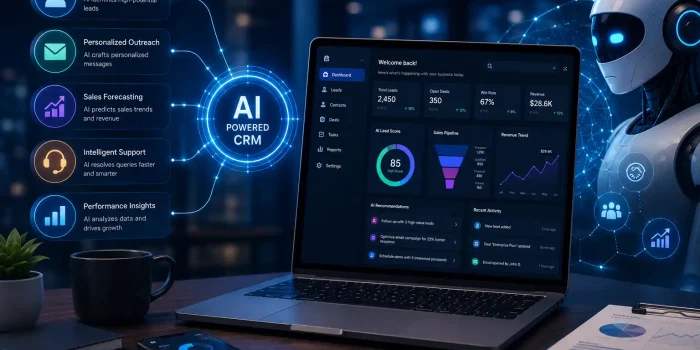

Small businesses are entering a new era of growth, and artificial intelligence is leading the transformation.
Just a few years ago, AI-powered automation was considered a luxury reserved for large enterprises with extensive budgets and dedicated technology teams. In 2026, the landscape looks completely different. Affordable AI tools, intelligent automation platforms, and autonomous digital assistants are enabling small businesses to operate with capabilities that were once available only to major corporations.
From customer support and marketing to finance and operations, AI is quietly becoming the invisible workforce behind thousands of growing businesses worldwide.
The question is no longer whether small businesses should adopt AI. The real question is how quickly they can adapt before competitors do.
The End of Manual Business Operations
Many small businesses still spend valuable hours handling repetitive administrative tasks.
Scheduling appointments, responding to customer inquiries, processing invoices, managing inventory, updating spreadsheets, and creating reports often consume a significant portion of the workday.
AI automation is changing that reality.
Modern business owners can now deploy intelligent systems capable of performing routine tasks automatically while maintaining accuracy and consistency.
Instead of spending hours managing operations, entrepreneurs can focus on strategy, innovation, and growth.
This shift is creating a new generation of lean, highly productive businesses.
AI Employees Are Becoming a Reality
One of the biggest trends in 2026 is the emergence of AI employees.
Unlike traditional software, modern AI systems can perform multiple business functions simultaneously.
These digital workers can:
- Answer customer questions 24/7
- Schedule meetings automatically
- Generate marketing content
- Analyze business data
- Create reports
- Manage workflows
- Monitor performance metrics
For small businesses with limited resources, AI employees provide a practical way to expand capabilities without dramatically increasing costs.
Many business owners now describe AI as their most productive team member.
Customer Service Is Becoming Instant
Consumers expect fast answers.
Waiting several hours or even days for a response is becoming increasingly unacceptable in today’s digital marketplace.
AI-powered support systems allow businesses to provide immediate assistance around the clock.
Advanced virtual agents can understand customer intent, resolve common issues, recommend products, and guide users through purchasing decisions without human intervention.
This not only improves customer satisfaction but also frees employees to focus on complex cases that require personal attention.
Marketing Teams Are Getting Smarter
Marketing is another area experiencing rapid transformation.
Small businesses are using AI to:
- Generate social media content
- Identify emerging trends
- Personalize email campaigns
- Optimize advertising performance
- Analyze customer behavior
- Discover new growth opportunities
What once required a dedicated marketing department can now be accomplished with a combination of human creativity and AI-powered automation.
The result is faster execution, improved engagement, and better return on investment.
Smarter Decisions Through Predictive Intelligence
One of the most powerful benefits of AI automation is its ability to transform raw data into actionable insights.
Modern AI systems can analyze customer behavior, sales patterns, inventory trends, and market conditions in real time.
Rather than reacting to problems after they occur, businesses can anticipate opportunities and challenges before they happen.
Predictive intelligence is helping small companies make decisions with a level of confidence that was previously difficult to achieve.
The Rise of Automated Workflows
Businesses are increasingly connecting multiple applications through intelligent automation platforms.
A single customer action can now trigger an entire chain of automated processes.
For example:
A customer places an order.
The inventory system updates automatically.
An invoice is generated.
A shipping request is created.
The customer receives tracking information.
The sales dashboard updates in real time.
What once required multiple employees can now happen within seconds.
This level of automation is dramatically improving operational efficiency.
Challenges Remain
Despite the excitement surrounding AI, successful adoption requires careful planning.
Businesses must address:
Data Privacy
Customer information must remain secure and compliant with regulations.
Human Oversight
Important decisions should still involve human review.
System Integration
AI tools must work effectively with existing software platforms.
Team Adoption
Employees need training to maximize the value of AI-powered systems.
Companies that balance innovation with responsible implementation are seeing the strongest results.
The Future Belongs to AI-Driven Businesses
Industry experts predict that AI automation will become as common as email or cloud software over the next decade.
Future systems may handle:
- Project management
- Customer relationship management
- Financial forecasting
- Business operations
- Sales optimization
- Strategic planning
The gap between businesses that embrace AI and those that resist it is likely to widen significantly.