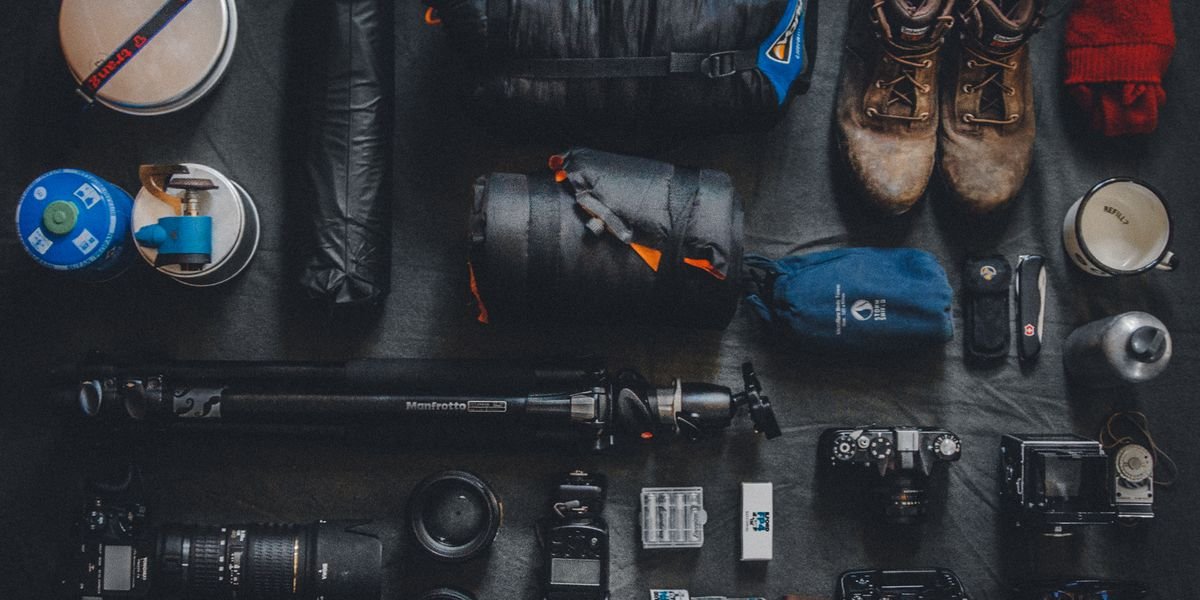
Photo by Alex Andrews on Pexels
What Is an Ultralight Backpacking Gear List?
A comprehensive ultralight backpacking gear list is a complete inventory of everything you carry on trail, built around the “Big 4”: your backpack, shelter, sleep system, and the small essentials that support them. These are the items where weight savings matter most, because they make up the bulk of what’s on your back.
The goal is a base weight, meaning the total weight of your gear without food, water, or fuel, of 10 pounds or less. Hit that number and hiking feels easier, your joints hurt less, and big miles become possible.
The Big 4 do most of the heavy lifting. A Hyperlite Mountain Gear pack, a trekking pole tent, an ultralight sleeping bag, and a sleeping pad like the Therm-a-Rest NeoAir XLite NXT anchor the kit. Swap any one for a heavier version and your base weight climbs fast.
Beyond the Big 4, you’ll add clothing, cooking, hydration, and safety items. Each one gets the same question: does it earn its place in your pack?
This guide teaches you how to build that kit for your trip type, your budget, and your body, not someone else’s.
The Big 4: Backpack, Shelter, Sleeping Bag, and Sleeping Pad
This is a comprehensive ultralight backpacking gear list, and it starts with the Big 4: your backpack, shelter, sleep system, and sleeping pad. These four items are where weight savings matter most. Together they often make up 60% or more of your base weight, so every ounce you cut here counts double.
Start with the backpack. Ultralight packs from Hyperlite Mountain Gear and Gossamer Gear weigh 1.5 to 2.5 pounds. They use waterproof Dyneema composite fabric instead of heavy nylon. That fabric is strong, light, and keeps rain out without a pack cover. A nylofume pack liner adds another layer of cheap insurance.
For shelter, trekking pole tents are the ultralight standard. They skip the poles and use your trekking poles instead, so a two-person tent can weigh under 2 pounds. A Zpacks flat groundsheet protects the floor. If you want freestanding ease, the Big Agnes Copper Spur is a popular pick.
Your sleep system has two parts. An ultralight sleeping bag, usually down, weighs 1 to 2 pounds. A sleeping pad like the Therm-a-Rest NeoAir XLite NXT or Nemo Tensor Trail adds 8 to 14 ounces. The Therm-a-Rest Z Lite Sol is a foam option that can’t puncture.
Backpack
The backpack is where every ounce you saved elsewhere gets carried, so it deserves the most attention. You want a pack that weighs 2 pounds or less, carries 25 to 35 pounds comfortably, and matches the volume of your gear. Look for waterproof Dyneema Composite Fabric or Ultra fabric, a roll-top closure, and a frame that transfers weight to your hips.
Hyperlite Mountain Gear Southwest 40L
The Southwest 40L weighs about 1.9 pounds. It is made from waterproof Dyneema Composite Fabric, so you can skip a rain cover and a pack liner. The 40-liter size fits a weekend kit or a fast three-season thru-hike. The tradeoff is price and a simple design with few pockets.
Gossamer Gear Gorilla 50
The Gossamer Gear Gorilla 50 weighs around 1.8 pounds and carries up to 35 pounds. It has a removable frame stay and lid, so you can strip it down to about 1.3 pounds for lighter trips. This is one of the best values in the ultralight market, and the 50-liter volume handles a bear canister or a longer food carry.
Zpacks Arc Haul Ultra 50L
The Arc Haul Ultra 50L weighs about 1.3 pounds. Its curved carbon frame keeps the pack off your back for airflow, which matters on hot, humid hikes. The Ultra fabric is waterproof and abrasion-resistant. If you want a framed pack that breathes, this is the one to look at.
Durston Kakwa 40
The Durston Kakwa 40 weighs roughly 1.8 pounds and carries loads up to 40 pounds. It uses an internal frame and a wide hipbelt, so it feels stable on rough ground. The 40-liter size suits three-season trips where your gear is dialed in.
Atom Packs Pulse
The Atom Packs Pulse is a custom UK-made pack that weighs about 1.4 pounds. You choose the fabric, size, and pockets when you order. It is a strong pick if you want a pack built to your body and your exact gear list.
What to Look For
Match pack volume to your gear, not to a number on a spec sheet. A 40-liter pack works if your sleeping bag and shelter pack small. Check the max load rating, because a 1-pound pack that sags at 30 pounds is not ultralight in practice. Add a nylofume pack liner or a stuff sack to keep your down sleeping bag dry. Weigh your pack on a kitchen scale before you buy, and compare that number to your total base weight.
Shelter
Shelter is one of the Big 4, and it is where the biggest weight swings hide. A trekking pole tent can weigh under 1.5 pounds, while a freestanding tent often runs 3 pounds or more. That gap is why so many ultralight backpacking gear lists start here.
Trekking Pole Tents
These tents use your trekking poles as the frame, so they skip the poles a freestanding tent needs. That saves weight and packed space. The Zpacks Triplex sleeps two to three people and uses waterproof Dyneema composite fabric. For a closer look at how it holds up, a zpacks triplex review is worth reading before you spend that much. The Gossamer Gear The One is a solo trekking pole tent that weighs about 1.3 pounds. The Durston X-Mid 1 sets up fast with two poles and costs far less than a Dyneema shelter. The SlingFin SplitWing is a modular option: use just the tarp in good weather, then add the inner when bugs show up.
Freestanding Tents
Freestanding tents stand up on their own, so you can pitch them on rock, sand, or hard ground where stakes will not hold. They weigh more, but the setup is simpler. The Big Agnes Copper Spur UL2 is the classic pick here, and it is one of the most popular two-person tents on the trail. It weighs around 3 pounds and has two doors and two vestibules. The Hyperlite Unbound 2 is a lighter freestanding option built from Dyneema composite fabric. If you want a tent that pitches without perfect ground, this category earns its extra ounces.
Tarps and Minimal Shelters
A tarp is the lightest shelter you can carry. A flat silnylon or Dyneema tarp can weigh under a pound. You pitch it with trekking poles and stakes, then add a bug bivy or inner net when you need one. Tarps need practice and good site selection. They work best for experienced hikers who camp below treeline and check the forecast. Pair a tarp with a Zpacks flat groundsheet to keep your sleeping pad clean and dry.
Tent Accessories: Stakes and Groundsheets
Stakes and groundsheets are small, but they add up. Swap the heavy stakes that come with your tent for titanium or carbon ones. A set of eight ultralight stakes often weighs under 3 ounces. A groundsheet protects your tent floor and your sleeping pad. Polycro is the lightest choice, and Dyneema is the most durable. Count every stake and cord in your base weight, because shelter accessories are easy to forget on a gear list.
Sleep System
Your sleep system is the third piece of the Big 4, and it usually weighs 2 to 4 pounds total. The three parts are your quilt or sleeping bag, your sleeping pad, and your pillow. Each one is a place where a few saved ounces add up fast.
Quilts vs Sleeping Bags
A quilt is an open-backed sleeping bag. It has no hood and no bottom insulation, because the down under you gets crushed flat and stops working anyway. Your pad handles that job instead.
Quilts win on weight. A 20°F quilt often weighs 1.5 to 2 pounds, while a similar down sleeping bag can hit 2.5 to 3 pounds. They also vent heat better on warm nights. The tradeoff is drafts. You need a pad with good sidewalls and a strap system to keep the quilt tucked in.
Sleeping bags still make sense if you sleep cold, roll around a lot, or camp in wet, windy places. A bag’s hood and full coverage are hard to beat below freezing. For most three-season trips, though, a quilt is the lighter pick.
Top Quilts: Enlightened Equipment Revelation, Katabatic Palisade
The Enlightened Equipment Revelation Quilt is one of the most popular quilts on the trail. It uses 850 to 950 fill power down and comes in 20°F, 10°F, and 0°F versions. A regular 20°F model weighs about 19 to 21 ounces.
What makes the enlightened equipment revelation quilt stand out is its open footbox. Zippers and drawcords let you open the bottom for warm nights or seal it shut when it’s cold. That range makes it a true three-season quilt. It also packs down to about the size of a football.
The Katabatic Palisade is the quilt for cold sleepers. It uses a differential cut, which means the outer shell is wider than the inner shell so the down never gets compressed. Its pad attachment system is one of the best in the business.
A 30°F Palisade weighs around 21 ounces. It costs more than the Revelation, but the build quality and draft control are top tier. If you toss and turn at night, this is the one to look at.
Sleeping Pads: Therm-a-Rest NeoAir XLite NXT, Nemo Tensor Trail, Therm-a-Rest Z Lite Sol
The Therm-a-Rest NeoAir XLite NXT is the classic ultralight inflatable pad. It has a 4.5 R-value, which measures how well a pad resists heat loss. Higher numbers mean warmer. A regular size weighs about 13 ounces and packs to the size of a water bottle.
The XLite NXT is a bit noisy when you move, and it costs a lot. But for the weight, warmth, and packed size, it’s hard to beat. It’s the pad most thru-hikers carry.
The Nemo Tensor Trail is a quieter, more comfortable option. Its R-value is 2.8, so it’s best for summer and mild spring trips. A regular weighs around 13 ounces.
The Tensor Trail uses a low-stretch fabric that feels less bouncy than the XLite. If noise bothers you or you sleep on your side, this pad nemo tensor trail is worth a look. Just know it’s less warm than the XLite.
The Therm-a-Rest Z Lite Sol is a closed-cell foam pad. There’s nothing to inflate, so it can never leak. A regular weighs 14 ounces with an R-value of 2.0.
It’s bulky on the outside of your pack, but many hikers use it as a frame or sit pad during the day. Some carry it under an inflatable pad for extra warmth and puncture protection. The therm-a-rest z lite sol is the pad to trust when a leak would ruin your trip.
Pillows: Hyperlite Stuff Sack Pillow, NEMO Fillo Elite
The Hyperlite Stuff Sack Pillow is a stuff sack with a fleece lining. You fill it with a puffy jacket or spare clothes, then flip it inside out. It weighs about 2 ounces and doubles as gear storage.
This is the lightest pillow option, and it costs almost nothing in weight. The catch is you need spare clothing to fill it. On cold trips, that clothing is already on your body.
The NEMO Fillo Elite is an inflatable pillow with a soft fabric cover. It weighs about 3 ounces and packs to the size of your fist. The cover is machine washable, which keeps it fresh on long trips.
It’s more comfortable than a stuff sack pillow, and the weight is still tiny. If you value sleep, the 3 ounces are worth it. Good sleep means more miles the next day.
Cook System
A cook system is one of the easiest places to shave weight, and you can build a complete one for under 5 ounces. The key items are a stove, a pot, a utensil, and a couple of small accessories. Here’s what works.
Canister Stoves: MSR PocketRocket 2, Soto WindMaster
The MSR PocketRocket 2 weighs about 2.6 ounces and costs around $45. It boils water fast and folds down small. It’s the standard starter stove for most ultralight backpacking gear lists.
The Soto WindMaster weighs about 3 ounces and handles wind far better. Its burner sits recessed, so gusts don’t kill the flame. That means less fuel burned and no need for a separate windscreen. The Soto WindMaster costs more, but if you cook in exposed places, it’s worth it.
Integrated Systems: Jetboil Stash
The Jetboil Stash is a stove and pot in one unit. The pot has a flux ring on the bottom that traps heat, so it boils water faster and uses less fuel. The whole system weighs about 7.1 ounces and nests into itself. The Jetboil Stash cooking system is heavier than a PocketRocket plus a titanium pot, but it’s simpler and more fuel-efficient on longer trips. For short trips, a separate stove and pot wins on weight.
Pots and Utensils: TOAKS Titanium 750ml Pot, Snow Peak Long Titanium Spork
The TOAKS Titanium 750ml Pot weighs about 3.6 ounces. Titanium is light, strong, and doesn’t rust. The 750ml size holds enough water for a meal plus a hot drink, and it fits a small canister and stove inside. The TOAKS titanium 750ml pot is the size most solo hikers settle on.
The Snow Peak Long Titanium Spork weighs about 0.6 ounces. The long handle reaches the bottom of a tall pot without getting your fingers messy. It’s one piece, so there’s nothing to lose.
Accessories: Pika Lid, Mini Bic
The Pika Lid is a silicone lid that fits most wide pots. It weighs about 1 ounce and lets you cover food while it rehydrates. It also keeps bugs out. A Mini Bic lighter weighs about 0.4 ounces and lights your stove. Bring one, not two.
Add a small stuff sack for the whole kit, and your cook system is complete. Total weight: roughly 5 to 8 ounces, depending on your stove choice.
Water Treatment and Storage
Water treatment and storage adds about 4 to 8 ounces to your pack, and it’s one place where cheap, light gear works as well as heavy, pricey gear. You need a filter to make water safe and bottles or bladders to carry it. That’s it.
Sawyer Squeeze
The Sawyer Squeeze is the most common filter on the trail. It weighs about 3 ounces and screws onto a Smartwater bottle or a bladder. You squeeze dirty water through the filter into a clean bottle. It removes bacteria and protozoa, which covers most backcountry water in the U.S. The flow slows down over time, so backflush it with the included syringe every few days.
Platypus QuickDraw
The Platypus QuickDraw is a lighter rival at about 2.2 ounces. It uses the same squeeze-through design, but the filter cartridge is wider, so water moves faster. The clean side has a cap you can flip open one-handed. It also comes with a backflush adapter. If you want speed and don’t mind paying a little more, this is a strong pick.
Katadyn BeFree
The Katadyn BeFree is the lightest of the three at about 2 ounces with its soft flask. The hollow-fiber filter is built into the flask cap, so you fill, squeeze, and drink. Flow is fast when new, but the filter clogs sooner than the others and can’t be backflushed as aggressively. It’s a good choice for short trips and clear water.
Smartwater Bottles and Cnoc ThruBottle
Smartwater bottles are the classic ultralight water bottle. A 1-liter bottle weighs about 1.3 ounces empty, costs a couple of dollars, and fits most filters and pack pockets. Many hikers carry two. The Cnoc ThruBottle is a soft-sided option at about 2.6 ounces. It’s wider, so it’s easier to fill from shallow sources, and it rolls up small when empty. Use one dirty bottle for collecting and one clean bottle for drinking.
Clothing
Your clothing is the easiest place to cut weight after the Big 4, because most of it does double duty. You wear some items and pack the rest, so every piece has to earn its spot. For most three-season trips, a complete ultralight backpacking clothing kit weighs about 3 to 4 pounds total, including what’s on your body.
Base Layers
Your base layer top and bottom sit against your skin and move sweat away from it. Look for thin, quick-drying synthetics or merino wool. The Patagonia Capilene Cool Daily Hoody is a popular pick at around 5 ounces. The hood adds sun and bug protection without a separate hat, and the fabric dries fast after a river crossing or a sweaty climb.
Mid Layers
A mid layer adds warmth while you hike or sits in camp on cool evenings. A lightweight fleece or a thin grid-fleece hoody works well here. Most weigh 7 to 10 ounces. This is the layer you’ll take on and off all day, so pick one that breathes and packs into its own pocket.
Insulated Jackets
This is your warmth layer for breaks and cold mornings. Down gives the best warmth for the weight, but it loses loft when wet. Synthetic fill keeps working in damp conditions. The Enlightened Equipment Torrid is a strong synthetic option at about 7 ounces, and it stays warm even if it gets soaked. Pack it loose in a stuff sack, not compressed tight, so the fill keeps its loft.
Rain Gear
An ultralight rain jacket keeps you dry and blocks wind. The Patagonia Torrentshell 3L is a proven choice at around 14 ounces, with a full hood and pit zips for venting. It’s heavier than a pure ultralight shell, but it’s durable and truly waterproof. Pair it with rain pants or a rain skirt for cold, wet days. Skip the poncho unless you’re hiking in warm rain.
Socks, Hats, and Gloves
Bring two pairs: one to wear, one dry pair for camp or sleep. The Darn Tough Hiker Micro Crew is a common pick. Merino wool resists odor, cushions the heel and toe, and comes with a lifetime warranty. Never sleep in your hiking socks. Damp socks pull heat from your feet all night.
A warm hat is one of the best warmth-to-weight items you can carry. The Minus33 Beanie weighs about 2 ounces and covers your ears on cold nights. In summer, a wide-brim hat or a hooded base layer handles sun. Many hikers bring both a sun hat and a warm beanie.
Thin fleece or wool gloves weigh 1 to 2 ounces and make cold mornings bearable. For real cold, add a waterproof shell mitt. Gloves are small, so it’s easy to leave them home and regret it. Toss them in your pack and forget about them until you need them.
Pack clothing you can layer, not clothing for every possible weather. A base layer, a mid layer, an insulated jacket, and a rain shell cover almost everything. Add a first aid kit and sunscreen lip balm with SPF, and your clothing and personal items are set.
Navigation and Safety Essentials
Navigation and safety gear is where you spend a few ounces to avoid a very bad day. The key items are a satellite messenger, a map and compass, a first aid kit, and an emergency whistle. Together they add roughly 6 to 10 ounces to your pack.
Garmin inReach Mini 3
The Garmin inReach Mini 3 weighs about 3.5 ounces and lets you send texts and an SOS from anywhere, even with no cell signal. It pairs with your phone over Bluetooth, so you type on a real screen. For solo hikers and remote routes, this is the one item worth its weight every time.
Map and Compass
A paper map and a Suunto Clipper Compass weigh almost nothing and never run out of battery. The Suunto Clipper clips to your watch band or pack strap, so you always know where it is. Print maps at home or buy the local map, then keep them in a zip bag. Learn to read them before you leave.
First Aid Kit
The Adventure Medical Kits Ultralight First Aid Kit weighs around 8 ounces and covers blisters, cuts, and small sprains. Add your own meds, a few extra blister patches, and a small roll of leukotape. An emergency whistle weighs under 1 ounce and clips to your shoulder strap. Three sharp blasts is the universal signal for help.
Electronics
Electronics are where a small kit can still add up, so every item here earns its place. The core group is a headlamp, a power bank, your phone, and the charging gear that ties them together. Together they weigh under a pound and keep you lit, charged, and reachable.
Nitecore NU25 UL Headlamp
The Nitecore NU25 UL weighs about 1.5 ounces and gives you a bright beam plus a red mode that saves battery at camp. It recharges by USB-C, so you never carry spare batteries. That is the whole point: one cable, no waste.
Nitecore Carbo 20000 Power Bank
The Nitecore Carbo 20000 is a 20,000 mAh power bank that weighs around 10.6 ounces. It holds enough charge for several phone top-ups and a headlamp refill on a week-long trip. Pick a smaller bank for short trips and this one for long ones.
Charging Accessories
Anker Nano II 65W charger, a short USB-C cable, and a small adapter set cover almost every device. The charger weighs about 4 ounces and refills a power bank fast in town. Keep cables in a tiny stuff sack so they do not tangle.
Your phone doubles as a camera, map, and backup light. Put it in airplane mode to save power. A waterproof case or zip bag keeps rain out.
Toiletries and Hygiene
Toiletries are where a lot of backpackers quietly carry half a pound of stuff they never use. The ultralight fix is simple: bring only what you will actually touch, and pick small, light versions of each item.
Toothbrush and Toothpaste
The GUM Folding Travel Toothbrush weighs about half an ounce and folds into its own handle, so it stays clean in your bag. For paste, squeeze a few days’ worth into a tiny dropper bottle or buy toothpaste tablets. Skip the full-size tube — it is dead weight after day two.
Sunscreen and Lip Balm
Carry a small tube of sunscreen and a balm with SPF, like Sun Bum Mineral SPF 30 Lip Balm. Both protect you above treeline, where sun bounces off snow and rock. Decant sunscreen into a 1-ounce bottle to cut grams. Lip balm with SPF also stops windburn, which is a real problem on exposed ridges.
Trowel and Bathroom Kit
The PACT Outdoors Shovel is a lightweight trowel that digs a proper 6-inch cathole. Pack it with a small bag for used toilet paper. Bury waste away from water, trails, and campsites. This kit weighs only a few ounces and keeps you Leave No Trace compliant.
Hand Sanitizer and Wipes
A 1-ounce bottle of hand sanitizer covers a week of trips. For pee rags, many women pack a Kula Cloth — a reusable, antimicrobial cloth that snaps onto a pack strap and replaces toilet paper. It weighs under an ounce and cuts waste on longer hikes. A few dried wipes handle bigger cleanup jobs.
Together, this whole kit usually lands under 6 ounces. That is a small price for staying clean, healthy, and comfortable on the trail.
Trekking Poles
Trekking poles are the one item that pays for its own weight. A good pair adds stability on descents, saves your knees, and lets you pitch a trekking pole tent — so you can leave the tent poles at home. Most pairs weigh 10 to 16 ounces. That is a fair trade for less pain and a lighter shelter. If you want to cut weight further, ultralight trekking poles are worth a look.
Gossamer Gear LT5
The Gossamer Gear LT5 is one of the lightest three-piece poles you can buy. A pair weighs about 10 ounces. They are made of carbon fiber, which is strong and light but can crack under hard sideways stress. The foam grips stay comfortable on long climbs. If low weight is your top goal, these are a smart pick.
Black Diamond Distance Carbon Z
The Black Diamond Distance Carbon Z is a folding pole that packs down small. A pair weighs around 10 ounces, and the z-fold design snaps together fast. The Black Diamond Distance Carbon Z costs more than most aluminum poles, but it is stiff and reliable. It fits well on a pack for trips that mix hiking and scrambling.
Zpacks Trekking Poles
Zpacks Trekking Poles are built to double as tent supports. A pair weighs about 10.6 ounces. They use a simple two-section design with a strap and cork grips. They work with most trekking pole tents, including the Zpacks Triplex. For a light, no-fuss pair, these are a solid choice.
Camp Shoes and Sandals
Ultralight camp shoes are the footwear you slip on after a long day of hiking. Most pairs weigh between 4 and 12 ounces, and they let your feet and socks air out while you set up camp. The lightest picks are sandals that double as stream-crossing shoes.
Bedrock Classic LT Sandals
The Bedrock Classic LT Sandals weigh about 9 ounces per pair. They have a strap system that holds your foot in place on rough ground, so you can wear them on short side hikes too. They cost around $110 and last for many seasons.
Zpacks Camp Shoes
Zpacks Camp Shoes are the lightest option here at roughly 4 ounces per pair. They are simple foam slippers with a thin sole. They are best for dry camps and flat ground, not for rocky terrain or water crossings.
Xero Shoes Z-Trail EV
The Xero Shoes Z-Trail EV is a minimalist sandal that weighs about 10 ounces per pair. The sole is thin, so you feel the ground under you. Many hikers like it for both camp and stream crossings.
Luna Sandals Venado
Luna Sandals Venado are a durable running-style sandal with a thicker sole. They weigh more than the other picks, but they handle miles of trail. If you want one pair for camp and water, the Luna Sandals Venado is a strong choice.
Bear Bag or Canister
Food storage is the last piece of a complete ultralight backpacking gear list, and it is one place where rules, not weight, decide your pick. Many parks now require an approved hard-sided canister, so check the rules for your route before you buy anything.
Ursack Major
The Ursack Major is a soft-sided bear bag made from bulletproof fabric. It weighs about 8 ounces and you tie it to a tree trunk instead of hanging it. It is not approved everywhere, so check the rules for your park first.
BearVault BV450
The BearVault BV450 is the classic ultralight bear canister for weekend trips. It holds about 4 to 5 days of food and weighs 2 pounds 1 ounce. The clear body lets you see what is inside, and the lid twists off without tools. It is approved in most parks that require canisters.
Wild Ideas Bearikade Scout
The Wild Ideas Bearikade Scout is a carbon fiber canister that weighs about 1 pound 12 ounces. It costs far more than the BearVault, but it saves real weight and holds about 4 days of food.
Adotec Black Bear-Resistant Food Locker
The Adotec Black Bear-Resistant Food Locker is another approved hard canister. It weighs about 2 pounds and opens with a coin. It is a solid budget option when the BearVault is sold out.
A bear canister doubles as a stool and protects your food from mice and rain. Pack food in a nylofume pack liner inside it, and keep smelly items like sunscreen lip balm out of your tent.
Base Weight Discussion
Base weight is the total weight of everything in your pack, minus food, water, and fuel. It is the number ultralight backpackers track most, because it is the weight you carry every step of every day.
What Is Base Weight?
Base weight covers your pack, shelter, sleep system, clothing, cook kit, and small essentials. Food, water, and fuel are “consumables” and change through the day, so they are counted separately. This is why base weight backpacking is the standard way to compare kits. It is also the number you write at the top of any backpacking gear list.
How to Calculate Base Weight
Weigh every item on a kitchen scale and add it up. Then subtract food, water, and fuel. A spreadsheet makes this easy: one column for the item, one for ounces, one for category. Sort by weight and you will see where the pounds hide. The Big 4 usually make up 60 to 70 percent of the total, so start there.
Target Base Weights
Under 20 pounds is lightweight. Under 10 pounds is ultralight. Under 5 pounds is hyperlight, and it takes skill and money. Most beginners land near 15 pounds, then drop a few pounds each trip. A 10 lb base weight is a good first goal.
For a printable ultralight backpacking checklist, list items by category with a weight column. Check things off as they go in your pack.
How to Choose Between a Quilt and a Sleeping Bag
A quilt is the lighter choice for most side sleepers and stomach sleepers, while a sleeping bag suits cold sleepers and restless movers. The quilt vs sleeping bag decision comes down to three things: how you sleep, how cold you sleep, and what you can spend.
Sleep Position
Quilts have no hood and no back panel. They strap to your sleeping pad and drape over you like a blanket. If you roll around at night, cold air sneaks in at the edges.
Back sleepers who stay still do great with a quilt. Side sleepers can too, as long as the pad straps fit snug. Stomach sleepers often prefer a bag because a quilt’s open back lets drafts in.
Temperature Rating
A sleeping bag temperature rating tells you the lowest temperature the bag is built to keep an average sleeper warm. Quilts use the same scale, but the number assumes you wear a warm base layer top and a hat.
Treat the rating as a limit, not a promise. If you sleep cold, add 10 degrees. A sleeping bag liner adds roughly 5 to 10 degrees for a few ounces.
For three-season trips, a 20°F quilt covers most nights. A 20°F down sleeping bag weighs more but seals in heat better below freezing.
Budget Considerations
Quilts cost less than bags at the same warmth because they use less material and less down. A quality 20°F quilt runs $250 to $400. A comparable down bag runs $350 to $550.
If your budget is tight, a quilt plus a good pad is the better buy. If you camp in real cold or sleep cold, a bag is worth the extra money.
Beginners often start with a bag and switch to a quilt later. Either way, pair it with a pad rated for the same temperatures.
How to Achieve a Low Base Weight: Techniques and Tips
A low base weight comes from small decisions made across your whole kit, not one magic piece of gear. These four habits do most of the work.
Multi-Use Items
Every item that does two jobs removes a third item from your pack. A trekking pole tent is the classic example: your Gossamer Gear LT5 poles become shelter supports, so you leave tent poles at home. A stuff sack pillow holds clothes by day and cushions your head at night. A Nylofume pack liner doubles as a waterproof stuff sack. Look at each item and ask what else it can do.
Repackaging
Original packaging is heavy and bulky. Decant sunscreen and lip balm with SPF into tiny dropper bottles. Repackage hand sanitizer, toothpaste, and bug spray the same way. Leave the bear canister stuff sack and the first aid kit’s plastic case behind. A few grams per item adds up to ounces, and ounces add up to pounds.
Strategic Omissions
The fastest way to cut weight is to leave things home. Skip the camp shoes if your trail runners are comfortable. Skip the sleeping bag liner in summer. Skip the extra pair of socks on a two-night trip. Ask one question for every item: will I use this on this specific trip? If the answer is no, it stays home.
Weighing and Tracking Gear
You cannot cut weight you have not measured. Use a kitchen scale that reads in grams, and log every item. LighterPack is the free tool most thru-hikers use; a lighterpack gear list shows your base weight, worn weight, and consumables in one view. It also exports a printable checklist, which answers the common question of how to organize your gear list in a spreadsheet. Weigh new gear before you buy it, then update the list.
How to Adapt Your Gear List for Different Conditions
Your ultralight backpacking gear list is not fixed. The Big 4 stay the same, but the details change with terrain and season.
Desert vs Alpine
In the desert, water is the heavy item. Carry a Sawyer Squeeze and extra Smartwater bottles, and skip the Jetboil Stash if fires are banned. A trekking pole tent pitches fine on sand with long stakes, but bring a Zpacks flat groundsheet for sharp ground.
Alpine trips flip the script. You need a warmer ultralight sleeping bag, a real ultralight rain jacket, and a shelter that handles wind. A freestanding tent like the Big Agnes Copper Spur UL2 beats a tarp above treeline. Add a Garmin inReach Mini for spots with no cell signal.
Summer vs Shoulder Season
A summer backpacking gear list runs light. Swap the down sleeping bag for a quilt, drop to a Therm-a-Rest Z Lite Sol, and pack one base layer top. A 30-degree bag and a Nemo Tensor Trail cover most July nights.
Shoulder season adds layers, not bulk. Bring an Enlightened Equipment Torrid, a beanie, and gloves. Trade the Z Lite Sol for a Therm-a-Rest NeoAir XLite NXT, which has a higher R-value for cold ground. Add a Nylofume pack liner so your quilt stays dry in rain.
One rule ties it together: match your kit to the trip, not the calendar. Weigh every swap, and your base weight stays low.
Budget Ultralight Backpacking Gear List
You can build a full ultralight backpacking gear list without spending $1,000. The Big 4 — backpack, shelter, and sleep system — are where weight savings matter most, so spend there first. Then save on everything else.
Budget Backpack
The REI Flash 55 is the go-to budget pick at about 3 pounds and often under $200. It is heavier than a Hyperlite Mountain Gear pack, but it costs a third as much. Save here if you are new. Splurge later once you know your base weight.
Budget Shelter
A trekking pole tent saves the most weight for the least money. Budget trekking pole tents often cost under $200 and weigh near 2 pounds. If you already carry poles, the shelter is nearly free weight-wise. Splurge on stakes and a groundsheet instead — they are cheap and protect your tent floor.
Budget Sleep System
The Kelty Cosmic Down 20 is the classic budget down sleeping bag, around 2.5 pounds for roughly $170. It is heavier than a quilt, but it is warm and reliable. Pair it with a Therm-a-Rest Z Lite Sol, a closed-cell foam pad that never punctures and costs about $45. Save on the pad, splurge on the bag’s temperature rating.
Budget Clothing
The Frogg Toggs Ultra-Lite2 Rain Jacket costs about $20 and weighs 5.5 ounces. It is not durable, but it keeps you dry and packs tiny. For budget ultralight gear, that tradeoff is worth it. Splurge on your base layer top and a pair of socks — those touch your skin all day.
Women’s Ultralight Backpacking Gear
Women’s ultralight backpacking gear follows the same Big 4 framework — backpack, shelter, and sleep system first — but fit and warmth need a closer look. A pack that carries well on a man’s frame can rub in the wrong places on a woman’s. And many sleeping bags rated for women run warmer than the label suggests. Here is what to change, and what to leave alone.
Women’s Backpacks
The Osprey Eja 58 is the go-to women’s ultralight pack, around 2.6 pounds. Its shoulder straps curve to fit a narrower chest, and the hipbelt flares to sit on wider hips. That means the load rides on your hips, not your shoulders. Most women’s packs also come in shorter torso lengths, so measure yours before you buy.
Women’s Sleeping Bags
The REI Magma 30 is a women’s-specific down sleeping bag at about 1 pound 13 ounces. Women often sleep colder than men, so bag makers add extra down and rate women’s bags on a separate scale. A bag rated 30°F for men may be labeled 30°F for women but hold more fill. If you sleep cold, drop one rating step below your expected low.
Hygiene: Pee Funnel and Kula Cloth
The pStyle is a rigid plastic pee funnel that weighs under 1 ounce. It lets you stand to pee, so you avoid balancing in the dark and dripping on your clothes. The Kula Cloth is a reusable antimicrobial pee cloth that clips to your pack. Together they replace toilet paper for peeing, which means less to pack out and less waste. Both are small items that make a real difference on trail.
Durability and Maintenance of Ultralight Gear
Ultralight gear is built thin to save weight, so it needs more care than standard gear. A few simple habits keep it alive for years.
Repairing DCF Tents
Dyneema composite fabric (DCF) is the waterproof material used in trekking pole tents like the Zpacks Triplex. It does not tear easily, but it can puncture. Carry DCF patch tape and clean the area with alcohol before applying it.
Washing Down Quilts
To wash down quilt insulation, use a front-loading machine on gentle with down-specific soap. Skip the agitator, dry on low with dryer balls, and store it loose, never compressed. This keeps the loft that traps your warmth.
Patching Sleeping Pads
To patch sleeping pad punctures, find the leak by submerging the pad in water and watching for bubbles. Clean the spot, then apply the patch kit that came with your pad. The Therm-a-Rest NeoAir XLite NXT and Nemo Tensor Trail both ship with one.
Check your gear before every trip. Small fixes at home beat cold nights in camp.
Safety and Emergency Preparedness
Safety gear is where ultralight thinking matters most. Every item must earn its place. This is the gear you hope never to use. A complete safety kit adds about 1 to 1.5 pounds to your base weight.
First Aid Kit Contents
Build an ultralight first aid kit around the real risks: blisters, cuts, and sprains. Include leukotape for hot spots, a few gauze pads, medical tape, antibiotic ointment, pain relievers, antihistamines, and a small roll of duct tape. The Adventure Medical Kits Ultralight First Aid Kit (about 8 ounces) covers most of this. But many hikers repackage it into a zip bag to save 3 to 4 ounces.
Satellite Messenger Usage
A satellite messenger like the Garmin inReach Mini 3 (about 4 ounces) lets you send texts and trigger SOS from anywhere without cell service. Activate your plan before the trip. Pair it with your phone. Send a test message from the trailhead. Share your tracking link with someone at home so they can follow your progress.
Emergency Protocols
Before you leave, file a trip plan with a trusted contact: route, campsites, and expected exit time. If something goes wrong, stop, treat the injury, and assess whether you can walk out. Use your satellite messenger’s SOS only for true emergencies. Carry a whistle on your shoulder strap. Six blasts is the universal distress signal.
Frequently Asked Questions
What are the essential items for an ultralight backpacking gear list?
The essentials are the Big 4: backpack, shelter, sleep system, and sleeping pad. Add a cook kit, water filter, clothing layers, navigation, first aid kit, and a headlamp. Everything else is optional. If you can’t name a real use for an item, leave it home.
How can I create a printable ultralight backpacking checklist?
Open a spreadsheet and list every item with its weight in ounces. Group items by category: shelter, sleep, cooking, clothing, and safety. Print it, then check off each item as you pack. After the trip, mark what you never used. Cut those items next time.
What gear is recommended for women’s ultralight backpacking?
Start with a pack built for a shorter torso, like the Osprey Eja. Sleeping bags rated about 10 degrees warmer than men’s versions work well, such as the REI Magma 30. Add a pee funnel and a Kula Cloth for hygiene. Fit matters more than saving the last ounce.
What is a good ultralight backpacking gear list for beginners?
Beginners should aim for a base weight under 15 pounds, not 10. Use gear you already own first. A Kelty Cosmic Down 20 and a Therm-a-Rest Z Lite Sol keep costs low. Upgrade one item at a time as you learn what bothers you on the trail.
How can I organize my ultralight backpacking gear list in a spreadsheet?
Make columns for item, category, weight in ounces, and price. Add a total row that sums your base weight. Tools like LighterPack do this for free and show a pie chart of where your weight comes from. Update it after every trip.
What are the best ultralight backpacking gear options?
The best options balance low weight, durability, and price. Top picks include the Hyperlite Mountain Gear Southwest 40L, a trekking pole tent like the Zpacks Triplex, the Therm-a-Rest NeoAir XLite NXT, and the Jetboil Stash cooking system. There is no single perfect list. The best gear is what fits your budget, your body, and the trips you actually take.