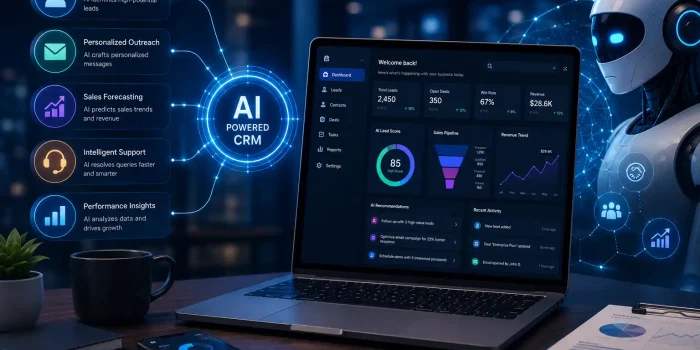

The workplace is evolving faster than ever, and one of the biggest shifts in 2026 is the growing presence of AI virtual assistants. Businesses of all sizes are adopting AI-powered tools to manage schedules, answer customer questions, generate content, analyze data, and automate repetitive tasks.
At the same time, human assistants remain a critical part of many organizations. Their ability to understand emotions, solve complex problems, and build relationships continues to provide value that technology cannot fully replicate.
As companies look for ways to improve efficiency and reduce costs, the debate between AI virtual assistants and human assistants has become increasingly relevant.
The Rise of AI Virtual Assistants
Over the past few years, artificial intelligence has evolved from a simple automation tool into a capable digital workforce. Modern AI assistants can handle a wide range of responsibilities that once required dedicated staff members.
Today’s AI assistants can:
- Schedule meetings automatically
- Draft emails and reports
- Manage calendars
- Answer customer inquiries
- Summarize documents
- Conduct online research
- Generate marketing content
- Analyze business data
Unlike human workers, AI assistants can operate continuously without breaks, making them attractive for businesses seeking round-the-clock productivity.
Why Human Assistants Still Matter
Despite rapid advances in AI, human assistants continue to offer advantages that technology struggles to match.
Human assistants excel in areas such as:
- Emotional intelligence
- Relationship management
- Strategic thinking
- Conflict resolution
- Creative problem-solving
- Handling unexpected situations
Many business leaders believe that trust, empathy, and human judgment remain essential in professional environments.
While AI can process information quickly, humans are often better equipped to navigate complex social and business situations.
Cost Comparison
One of the primary reasons businesses are exploring AI assistants is cost efficiency.
A traditional assistant typically requires:
- Salary and benefits
- Training expenses
- Workspace resources
- Ongoing management
AI assistants generally operate through subscription-based pricing models, making them significantly more affordable for startups and small businesses.
For organizations with limited budgets, AI can provide access to capabilities that were previously difficult to afford.
Productivity and Speed
When it comes to speed, AI assistants have a clear advantage.
Tasks that may take a human assistant hours can often be completed by AI in minutes.
Examples include:
- Generating meeting summaries
- Creating content drafts
- Sorting large datasets
- Researching market trends
- Preparing reports
This efficiency allows businesses to respond more quickly to opportunities and customer needs.
However, speed does not always guarantee accuracy. Human review remains important for critical tasks.
Accuracy and Decision-Making
AI systems rely on training data and algorithms to generate responses and recommendations.
Although accuracy has improved significantly, AI can still:
- Misinterpret context
- Provide incomplete information
- Generate outdated insights
- Make reasoning errors
Human assistants bring experience, intuition, and situational awareness to decision-making processes.
For high-stakes business decisions, most organizations continue to rely on human oversight.
Customer Experience
Customer interactions remain one of the most important areas where human assistants have an advantage.
Customers often appreciate:
- Personalized communication
- Empathy during difficult situations
- Human understanding
- Relationship-building conversations
AI assistants can answer routine questions efficiently, but human assistants are often better suited for complex or sensitive interactions.
Many businesses now use a hybrid approach, where AI handles common inquiries while humans manage advanced support cases.
The Hybrid Workforce Model
Rather than replacing human assistants entirely, many organizations are combining human expertise with AI capabilities.
In this model:
- AI handles repetitive administrative work
- Human assistants focus on strategic tasks
- Automation improves efficiency
- Employees concentrate on higher-value activities
This partnership allows businesses to maximize productivity while maintaining a human touch.
Industry experts predict that hybrid teams will become the standard workplace structure over the next several years.
What the Future Looks Like
The future of workplace assistance is unlikely to be a battle between humans and machines.
Instead, it will be a collaboration.
AI assistants will continue to become faster, smarter, and more capable. Human assistants will increasingly focus on leadership, communication, creativity, and relationship management.
Businesses that successfully combine both strengths are expected to gain a competitive advantage in an increasingly digital economy.
Final Thoughts
The comparison between AI virtual assistants and human assistants is not about choosing one over the other. Each offers unique advantages that can support business growth.
AI provides speed, scalability, and cost efficiency, while human assistants deliver judgment, empathy, and adaptability. In 2026, the most successful organizations are not replacing people with AI. They are building smarter teams where technology and human expertise work together to achieve better results.