For decades, passwords have been the internet’s primary security system.
From email accounts and social media platforms to banking applications and workplace software, passwords have protected nearly every aspect of our digital lives. Yet despite constant improvements in cybersecurity, passwords continue to be one of the weakest links in online security.
Weak passwords, password reuse, phishing attacks, and credential leaks have become increasingly common problems. In response, the technology industry is embracing a new authentication method that promises stronger security and a simpler user experience: passkeys.
In 2026, more websites, applications, and online services are transitioning away from traditional passwords and adopting passkey-based authentication. Industry leaders such as Google, Apple, Microsoft, and countless online platforms are accelerating this shift, signaling what many experts believe is the beginning of a passwordless future.
Why Passwords Are No Longer Enough
Passwords were designed for a much simpler internet.
Today, the average user manages dozens, sometimes hundreds, of online accounts. As a result, many people reuse passwords across multiple services or choose easy-to-remember credentials that can be guessed or stolen.
Cybercriminals have become increasingly sophisticated in exploiting these weaknesses.
Common password-related threats include:
- Phishing attacks
- Credential stuffing
- Data breaches
- Password reuse
- Social engineering
- Brute-force attacks
Even when users follow recommended security practices, passwords remain vulnerable because they depend heavily on human behavior.
The growing number of cyber threats has created demand for a more secure and user-friendly alternative.
What Are Passkeys?
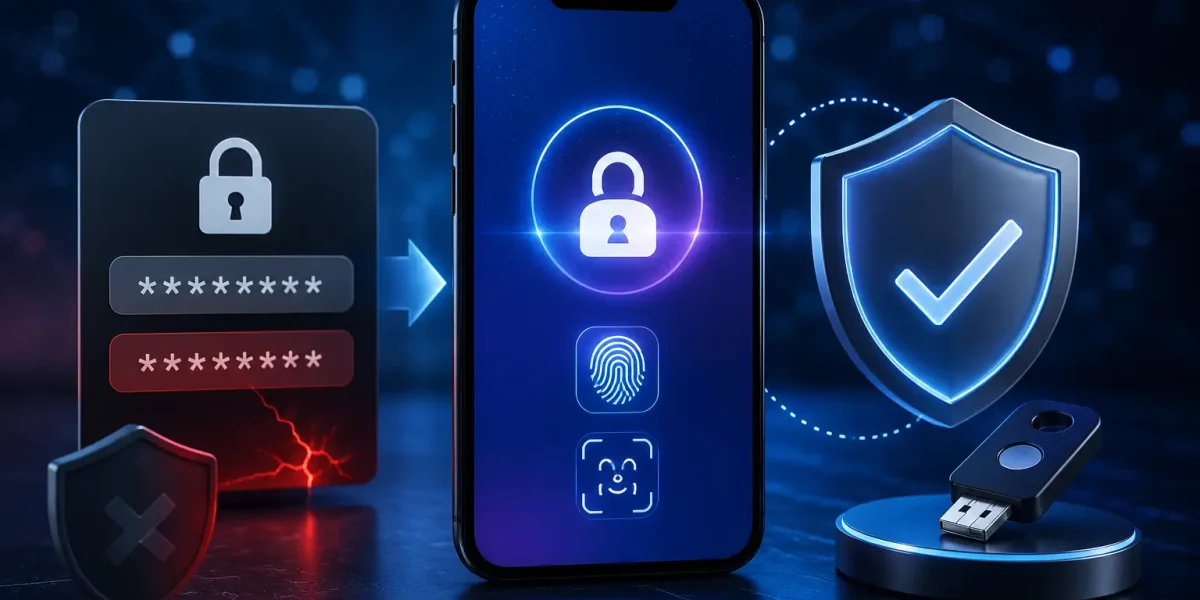
Passkeys are a modern authentication technology designed to replace traditional passwords.
Instead of requiring users to create and remember credentials, passkeys use cryptographic keys stored securely on trusted devices such as smartphones, tablets, or computers.
When users sign in, authentication is completed through methods they already use daily, including:
- Fingerprint recognition
- Face recognition
- Device PINs
- Security hardware
The process is seamless and typically takes only a few seconds.
Unlike passwords, passkeys are not transmitted across the internet, making them significantly more resistant to cyberattacks.
How Passkeys Work
Passkeys rely on public-key cryptography.
When a user creates an account, two unique cryptographic keys are generated.
Public Key
The public key is stored on the website’s servers.
Private Key
The private key remains securely stored on the user’s device.
During login, the website sends a challenge that can only be verified using the private key. Since the private key never leaves the user’s device, attackers cannot steal it through traditional phishing or data breach techniques.
This architecture dramatically improves security while simplifying the login experience.
Passkeys vs Passwords: Key Differences
Security
Passwords can be stolen, guessed, or leaked.
Passkeys are protected by device-level security and cryptographic verification, making them far more difficult to compromise.
User Experience
Passwords require users to remember complex credentials.
Passkeys allow users to authenticate using biometrics or device authentication methods they already trust.
Phishing Resistance
Phishing remains one of the most successful cyberattack methods.
Passkeys are designed to prevent phishing because authentication only works with legitimate websites.
Convenience
Forgotten passwords create frustration and support costs.
Passkeys eliminate password reset processes entirely.
Cross-Device Access
Modern passkey systems can securely synchronize across trusted devices, making account access simple and seamless.
Why Major Technology Companies Are Supporting Passkeys
The shift toward passkeys is not being driven by a single company.
Instead, it is the result of industry-wide collaboration through organizations such as the FIDO Alliance.
Technology leaders including Google, Apple, and Microsoft have integrated passkey support into their ecosystems because they recognize both the security and usability benefits.
For businesses, passkeys offer several advantages:
- Reduced account compromise rates
- Lower support costs
- Improved user experience
- Stronger regulatory compliance
- Better customer trust
As adoption grows, passkeys are quickly becoming a competitive necessity rather than an optional feature.
Industries Leading the Transition
Financial Services
Banks and fintech companies are embracing passkeys to strengthen account security.
E-Commerce
Online retailers are using passkeys to reduce fraud and improve checkout experiences.
Enterprise Software
Businesses are adopting passwordless authentication to secure employee access.
Healthcare
Healthcare providers are exploring passkeys to protect sensitive patient information.
Consumer Technology
Many consumer-facing platforms now offer passkey login options by default.
These industries are helping accelerate mainstream adoption across the internet.
Challenges Slowing Adoption
Although passkeys offer significant advantages, the transition is not without obstacles.
User Awareness
Many users are unfamiliar with passwordless authentication.
Legacy Systems
Older websites and applications may require significant infrastructure updates.
Device Compatibility
Organizations must ensure support across multiple operating systems and devices.
Transition Period
For the foreseeable future, passwords and passkeys will likely coexist as businesses gradually modernize authentication systems.
Despite these challenges, adoption continues to grow rapidly.
What the Future Looks Like
Cybersecurity experts increasingly believe that passwords will eventually become obsolete.
Future authentication systems are expected to rely on:
- Passkeys
- Biometrics
- Device-based authentication
- Behavioral verification
- Multi-factor security layers
As users become more comfortable with passwordless experiences, organizations will continue reducing their reliance on traditional credentials.
The internet is moving toward a future where authentication becomes both safer and simpler.
Final Thoughts
Passwords have served the internet for decades, but their limitations are becoming increasingly apparent in a world of sophisticated cyber threats and growing digital complexity.
Passkeys offer a powerful alternative by combining stronger security with a significantly improved user experience. They eliminate many of the risks associated with passwords while making account access faster and more convenient.
In 2026, the shift toward passkeys is no longer a prediction. It is actively happening across the web.
As more websites, applications, and businesses adopt passwordless authentication, passkeys are poised to become the new standard for digital security.